Toledo, Spain. Complete Travel Guide to visiting Toledo from Madrid
Toledo: The City of Three Cultures
Perched five hundred and twenty nine metres above sea level, with a population of around eighty-eight thousand, Toledo is only a thirty-minute ride on the fast train from Madrid, and it's one of our favourite places we've visited in Spain.
Known as an ancient walled city set on a hill above the plains of Castile-La Mancha, Toledo earned its nickname the "City of Three Cultures" for its medieval Arab, Jewish and Christian history, all layered on top of one another across centuries.


Getting the lay of the land
Stepping off the train, we found a hop-on hop-off bus parked right outside the station, so we jumped on for a loop around the base of the old town, along the edge of the gorge and the river, with a few stops for panoramic views. It's a great way to get your bearings before you start walking, and the ticket also included entrance and a guided tour of the cathedral.
One thing our guide pointed out: the streets of Toledo were deliberately built winding and disconnected, so invaders couldn't easily navigate the city. It's chaos with a purpose, and it makes wandering the old town feel like being in on a very old secret.
If you're not staying overnight, the same bus will drop you back at the train station in plenty of time for your return trip.

The Cathedral: Santa Iglesia Catedral Primada de Toledo
We met our guide, Alejandro, at Plaza de Zocodover for our 1:30pm tour, and he was worth every minute. A Toledo local himself, he grew up attending services here with his father, and that personal connection made the whole experience feel far more grounded than a standard tour.
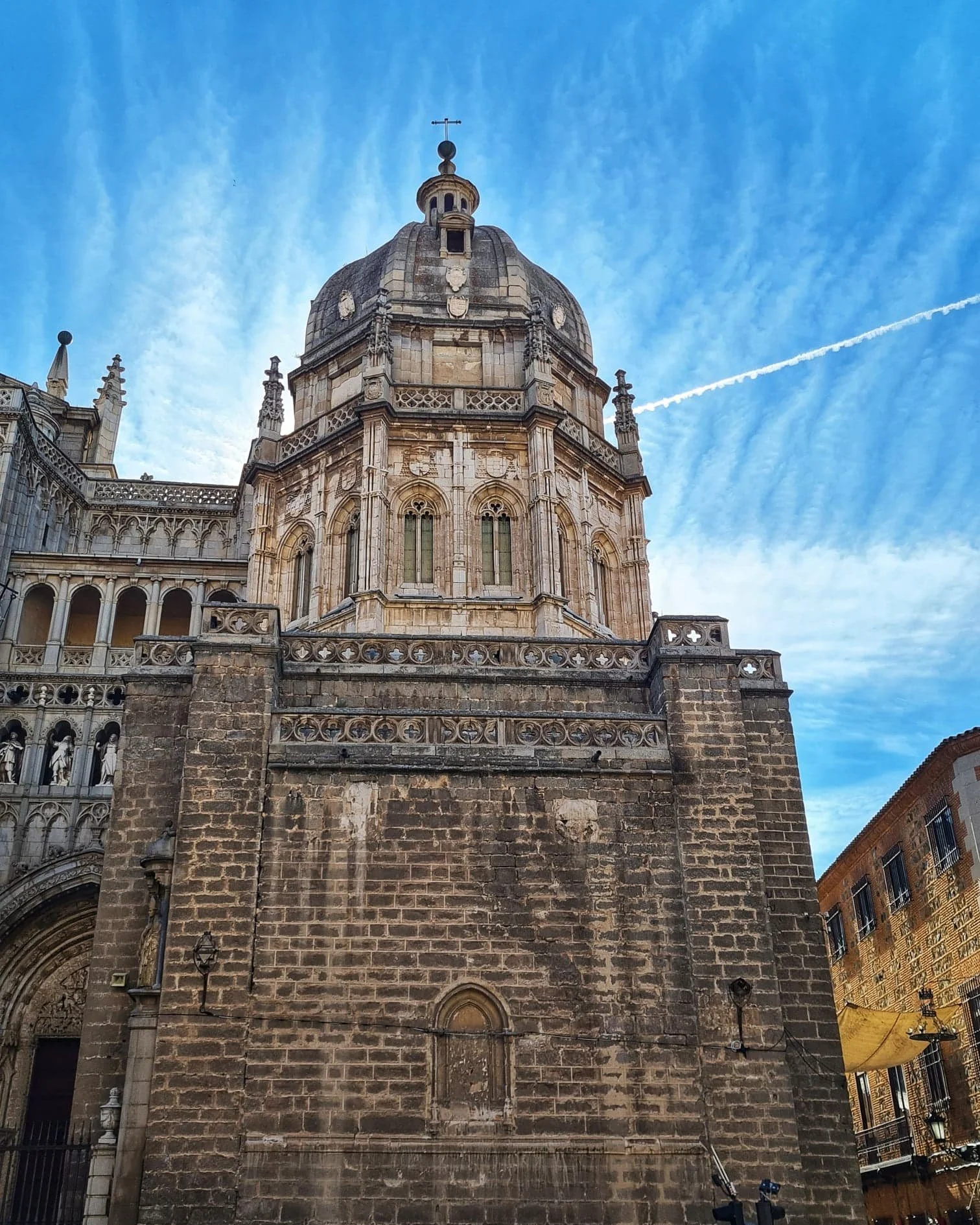
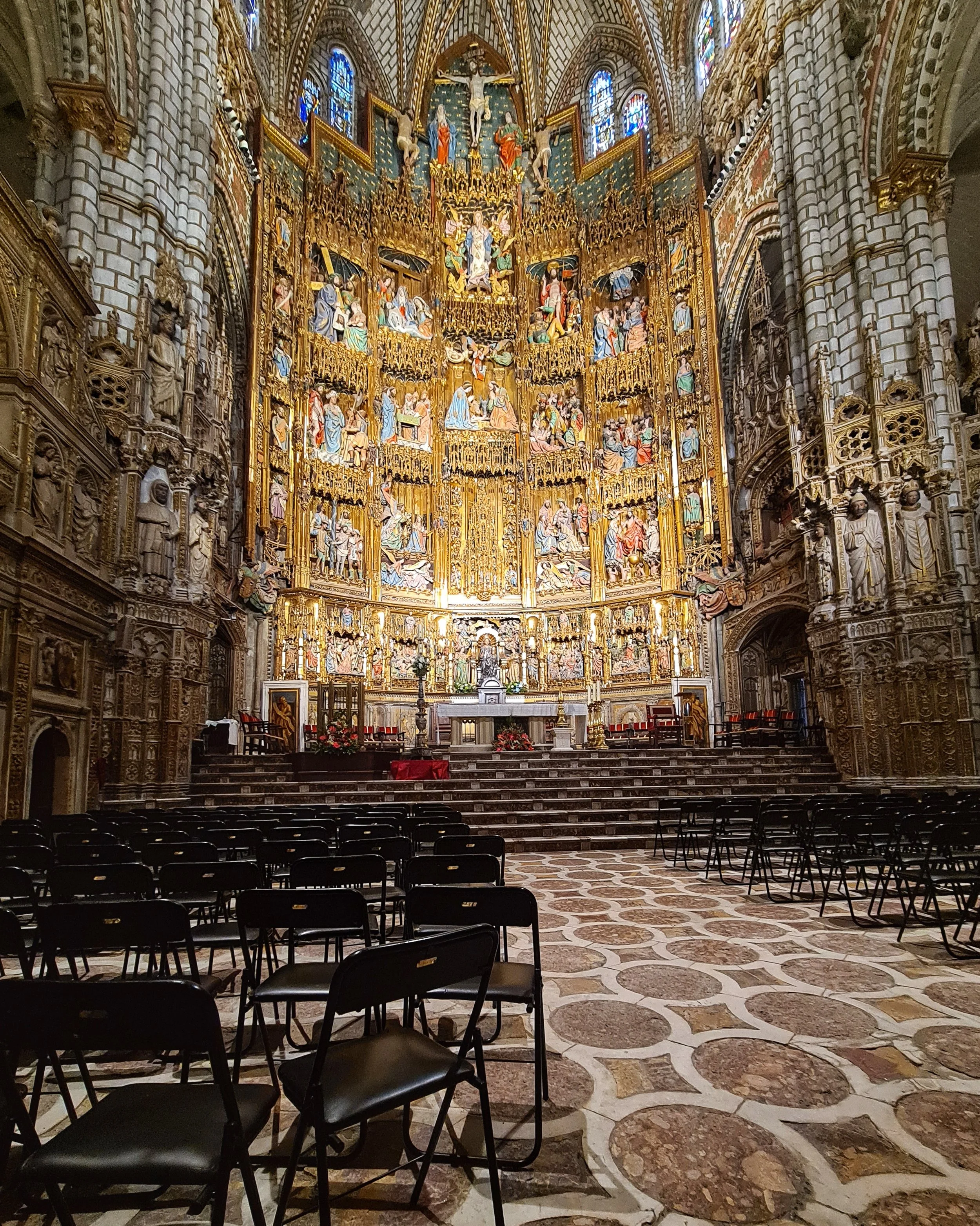
The first church on this site dates back to 587, later replaced by mosques and further churches, before construction on the cathedral standing today began in 1227 and finished in 1493. At 120 metres long, 60 metres wide and around 45 metres high, it's an enormous space.
A few things that stood out to us:
Private family chapels. Wealthy citizens and church hierarchy could purchase a chapel within the cathedral to be buried in, and the donations funded much of the building's construction. Every Archbishop of Toledo is buried here, and the only way to spot a cardinal's tomb is to look up, their purple hat hangs from the ceiling on a rope.
The choir stalls. Around 400 carved wooden seats, done by two different artists on either side, one realistic down to the folds in fabric, the other more about capturing movement. You'd never guess they were two different hands unless someone points it out.


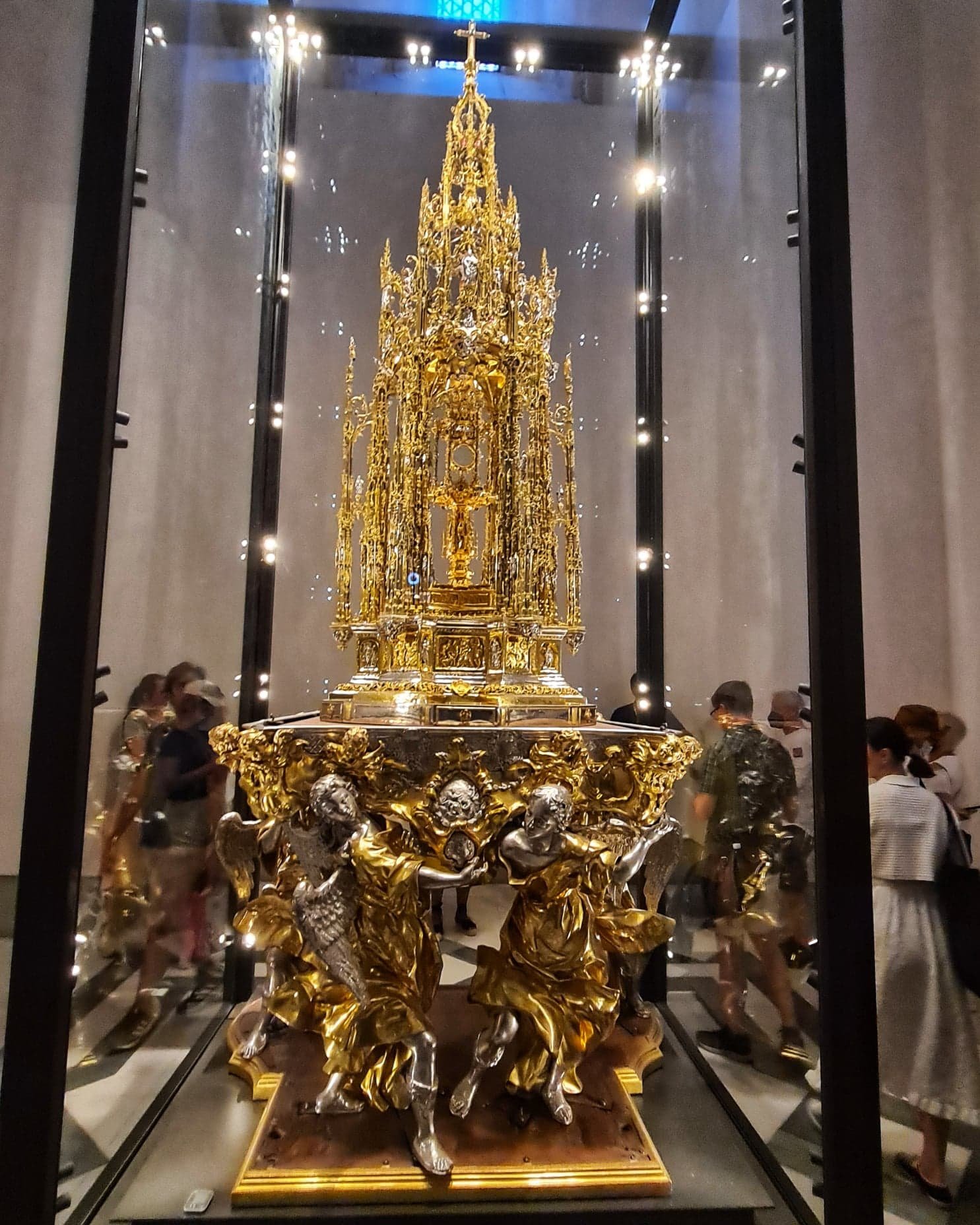
The Monstrance of Toledo. A solid gold monstrance weighing 237 kilograms, used to hold the body of Christ during the Eucharist, brought out only once a year for Corpus Christi in June. It's larger than the one at the Vatican, and by gold value alone it's worth close to fourteen and a half million dollars, before you even factor in the artistry.
The artwork. Toledo native El Greco features heavily, alongside works by Caravaggio and Goya, some of the finest artists of their time.
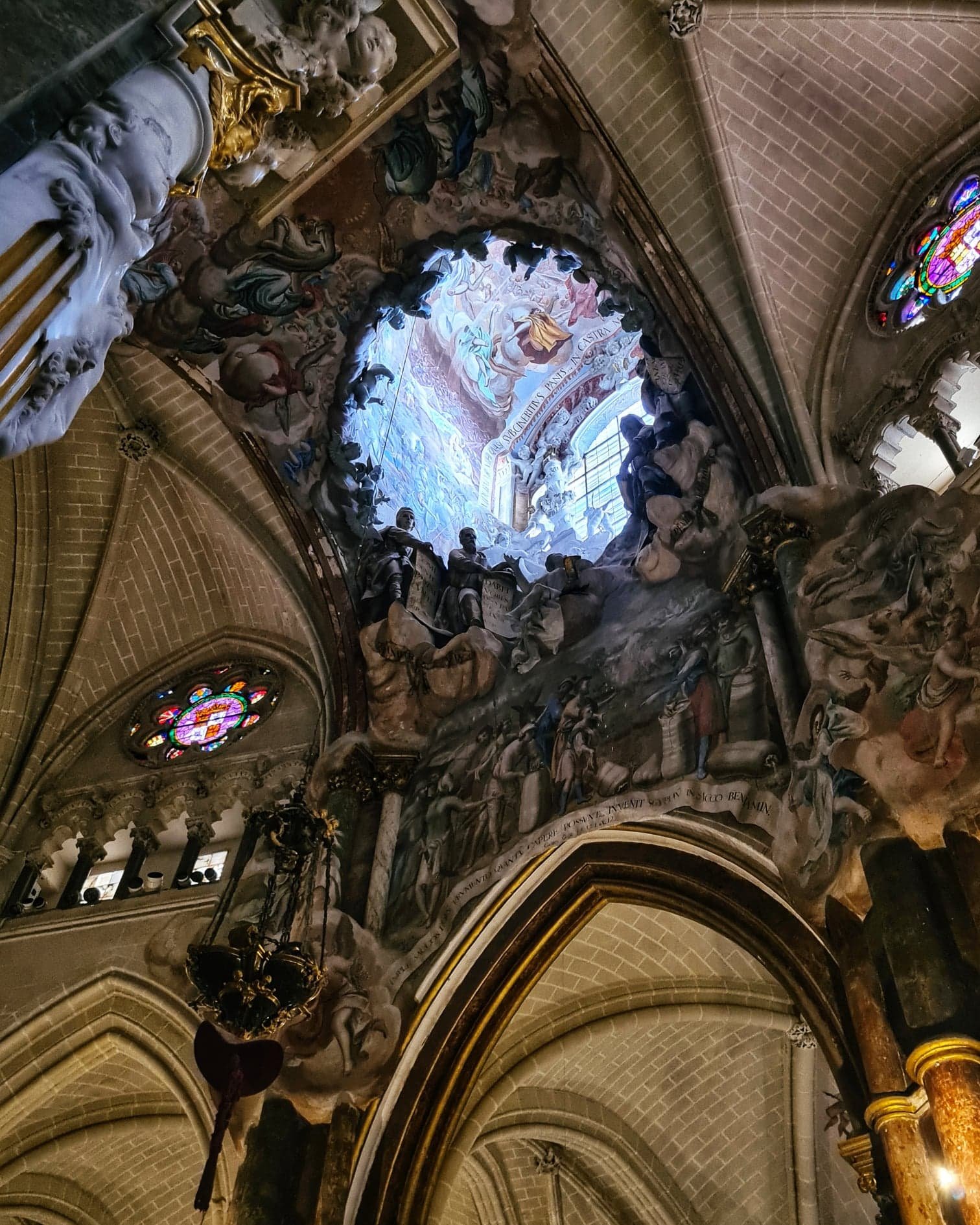
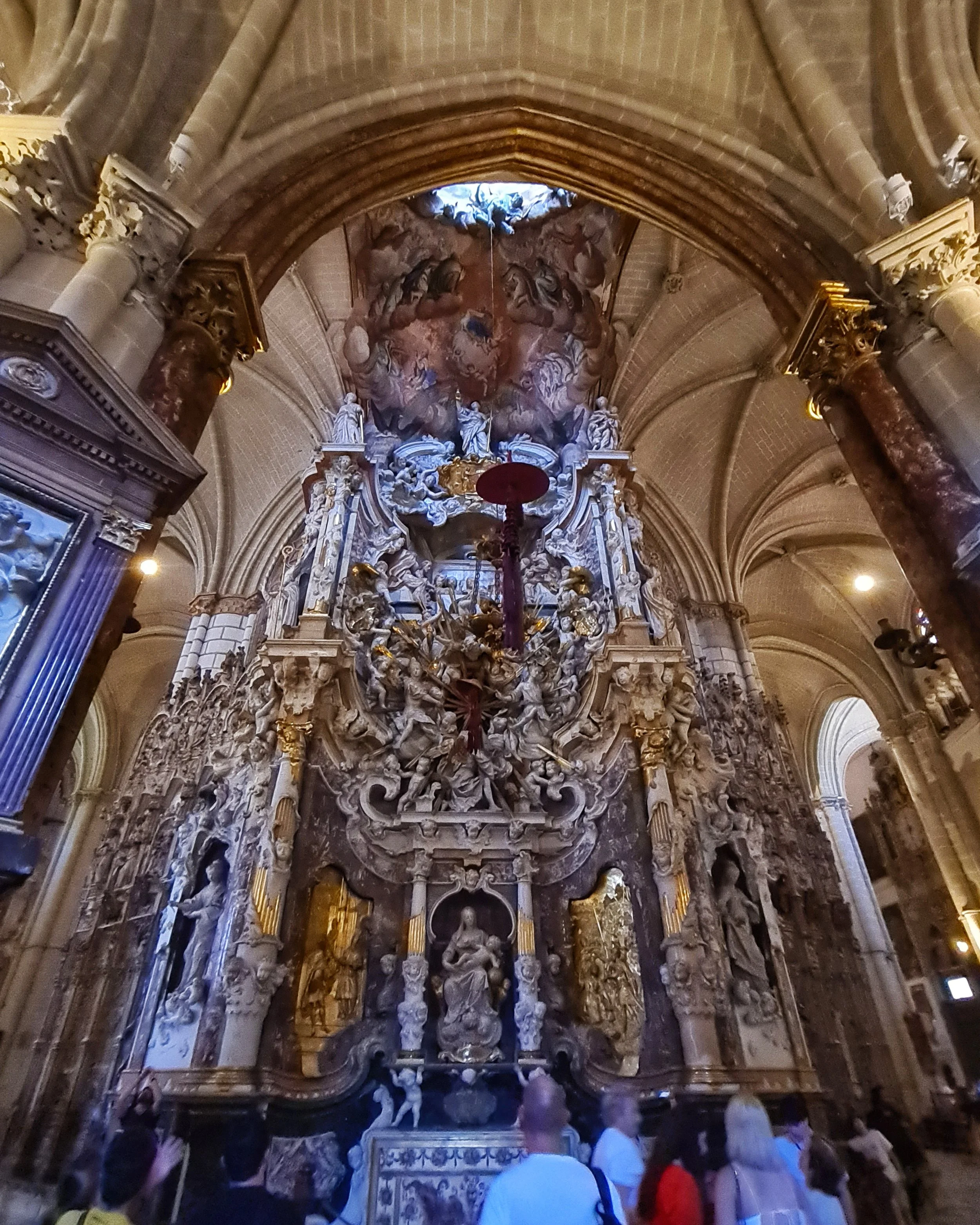
The Transparente. One archbishop wanted more natural light in the church, so he had a hole cut into the ceiling and then had it beautifully painted and decorated around the opening, an extraordinary bit of architectural cheek.
The cathedral is still an active place of worship, with services held daily. It's easily one of the most impressive cathedrals we've visited, and having a guide with genuine roots in the city made all the difference.


Sword shops and old town shopping
Toledo steel is world famous, and the number and size of the sword shops in the old town is something else, metre-and-a-half blades with ornate handles, full suits of armour, and knives and swords stacked on walls by the hundred. There are also plenty of leather goods shops if jackets and accessories are more your thing.
Wine with a view: Terraza del Bú
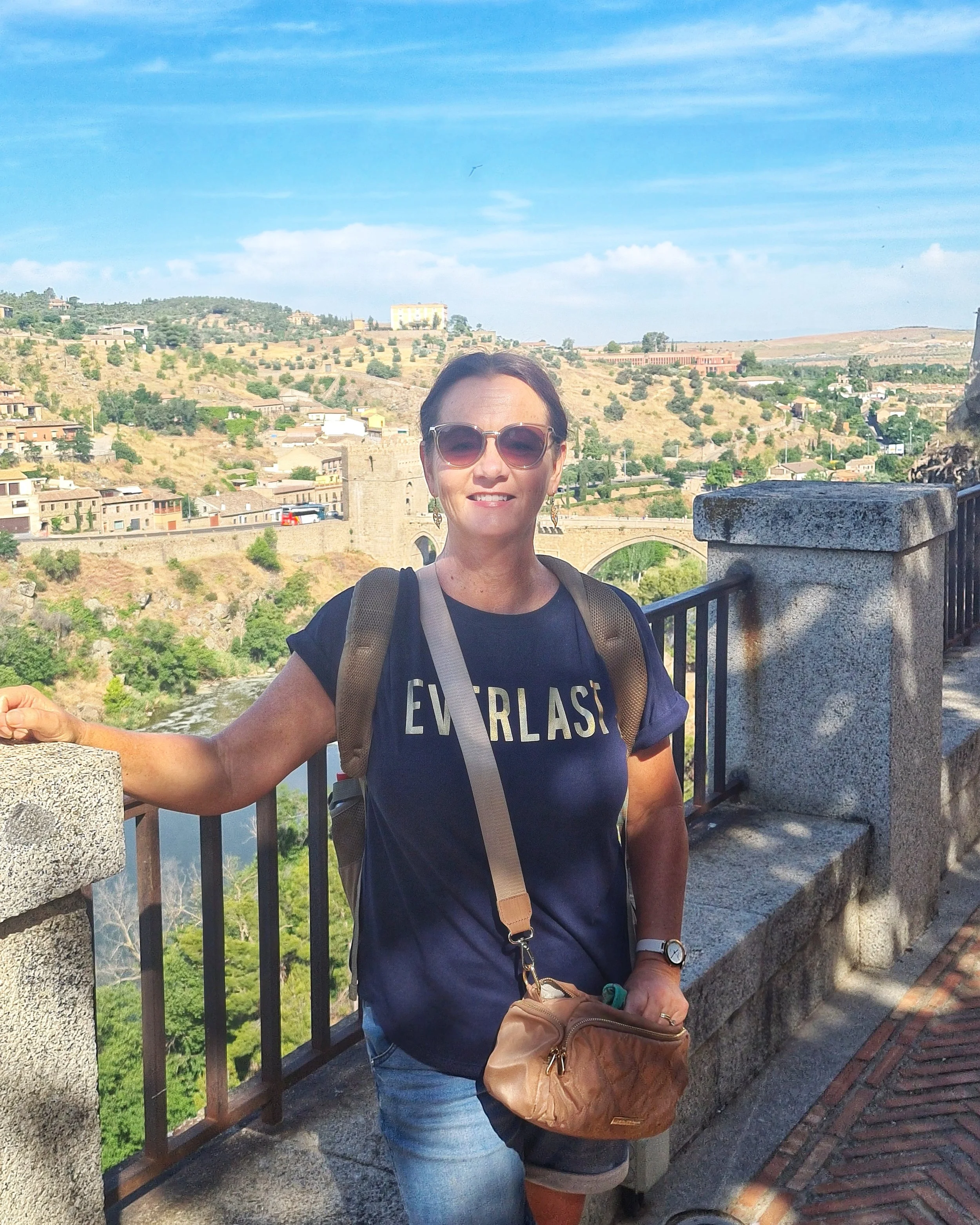
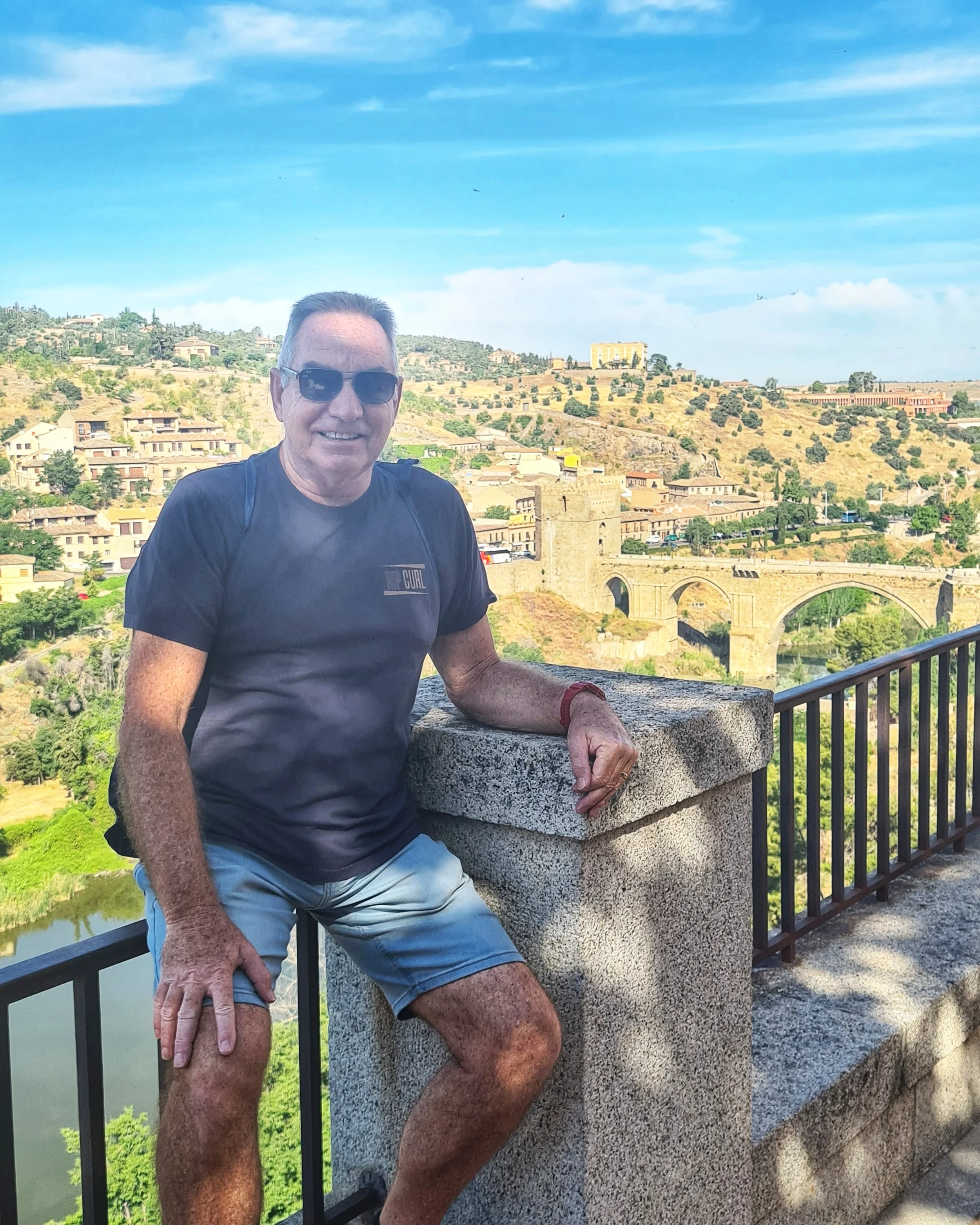
After the cathedral and a wander through the sword shops, we went looking for a bar with a view over the gorge, and found it at Terraza del Bú, a terrace bar perched right on the edge, looking down to the Tagus River (Río Tajo). Across the gorge sits the Infantry Academy, built in 1850, and below are two old bridges, the Puente Nuevo de Alcántara and the older Puente de Alcántara.
We'd landed in the middle of the locals' Sunday session, surrounded by Toledo's young and beautiful, wine in hand, history all around us. Surreal is the only word for it, and it remains one of our favourite moments from the whole trip.
Dinner at Damascus
We finished the day at Damascus, a Syrian restaurant in the old town. No alcohol on the menu there, so it was our first wine-free dinner in Spain, but the food more than made up for it, and honestly, we were tired enough that an early, alcohol-free night was probably a good thing.

The Jewish Quarter and the walk back
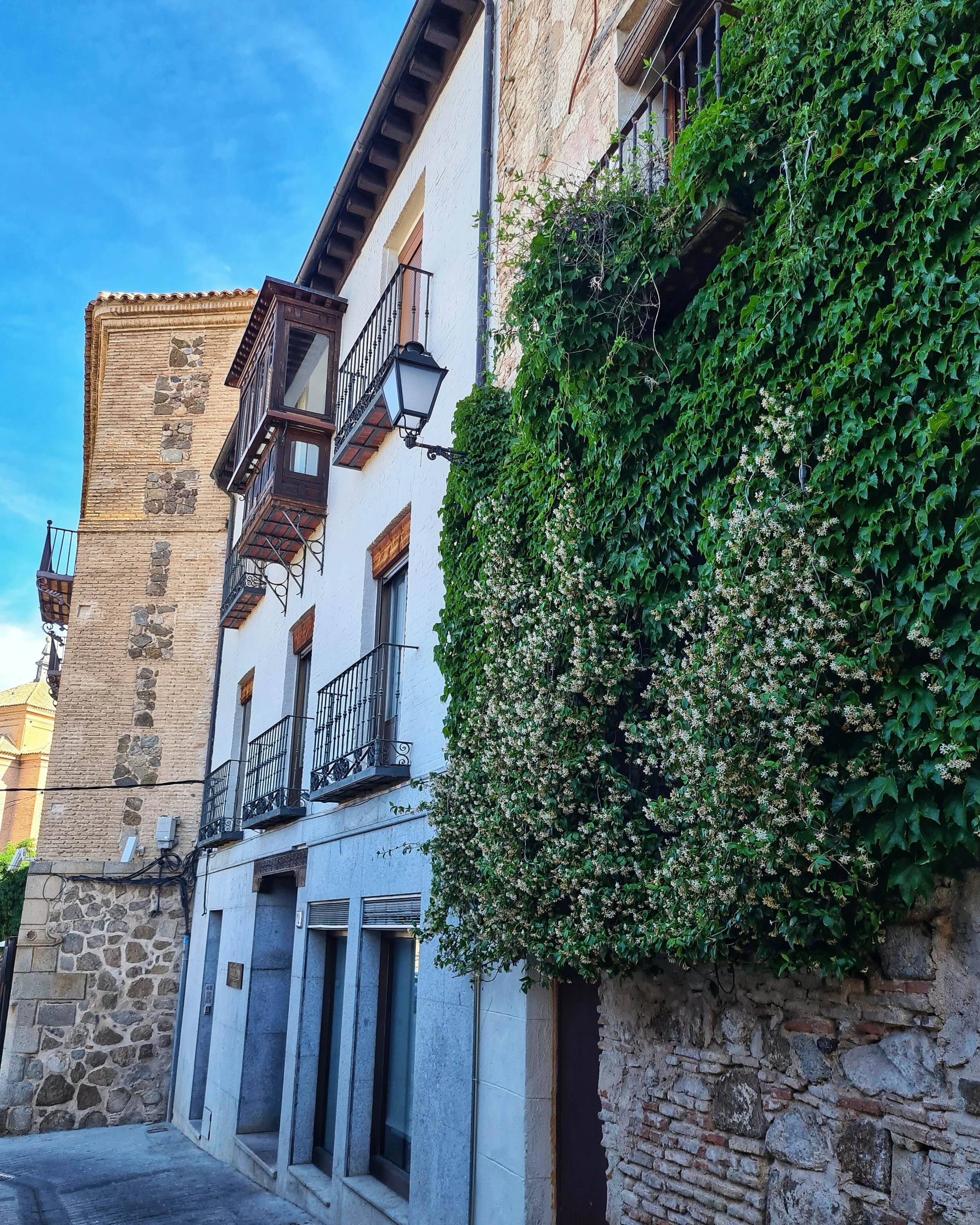
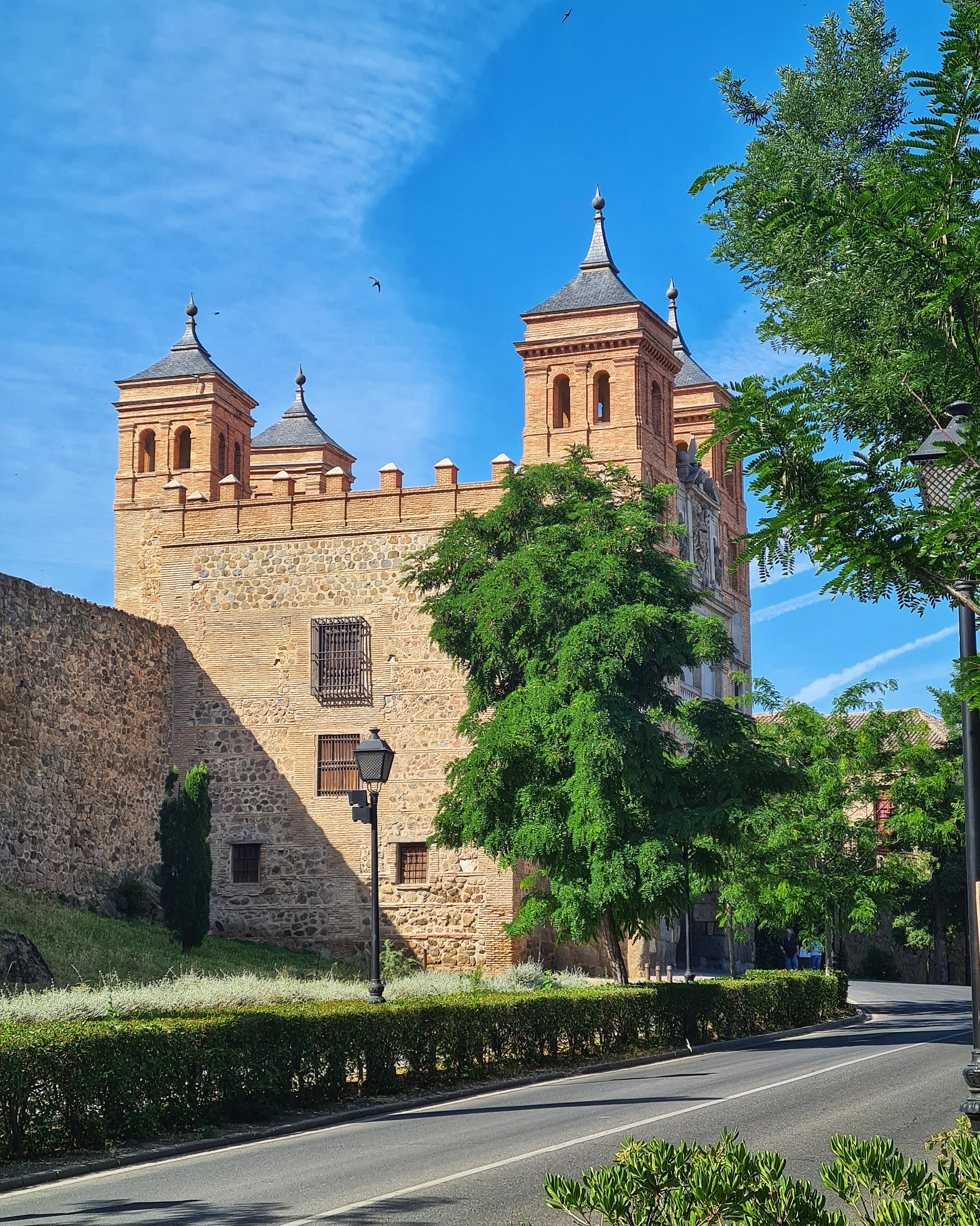
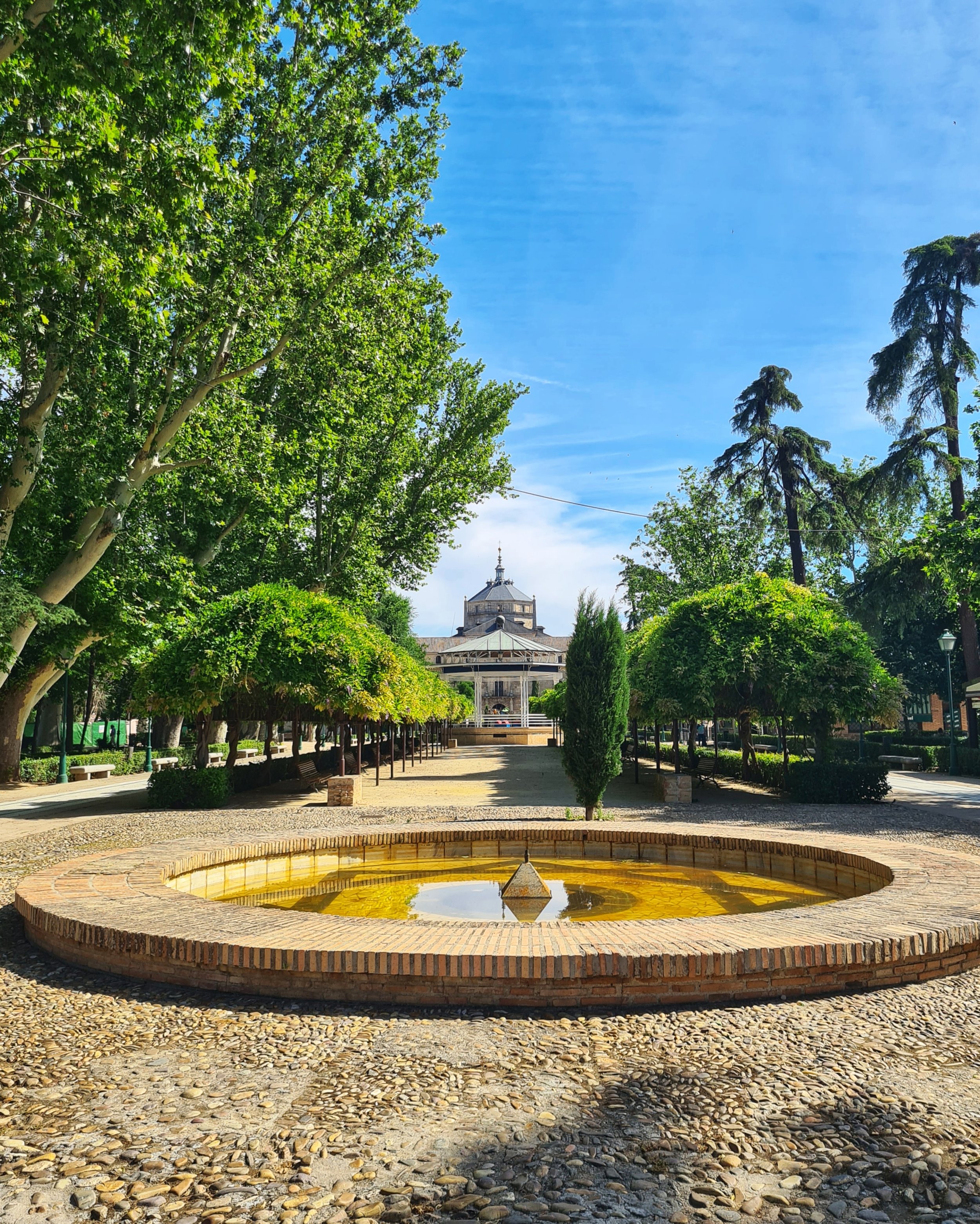
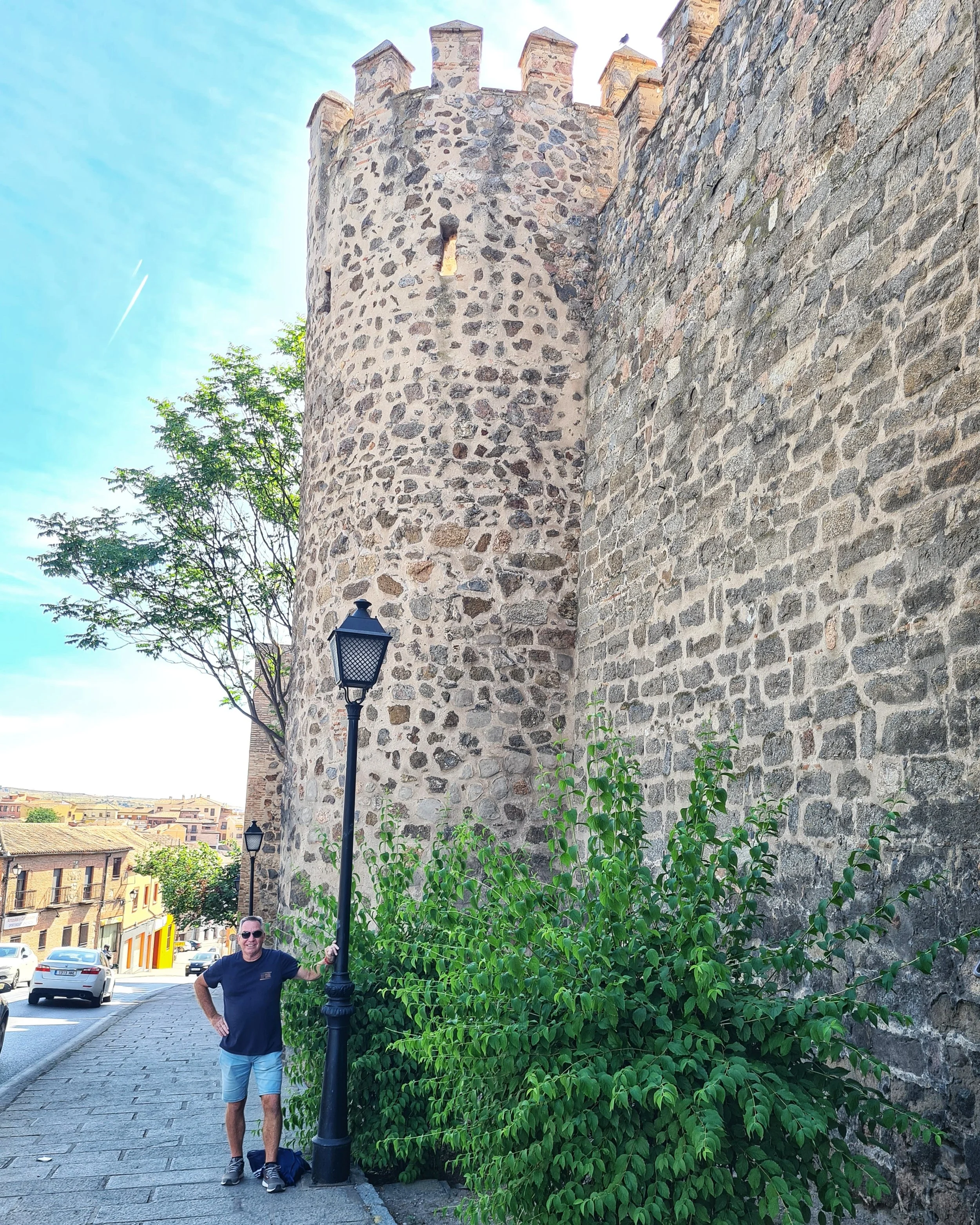
The next morning we headed into the Jewish Quarter, a more orderly part of town with beautiful balconies, a church and a synagogue, and terraces along the gorge that make for a peaceful morning walk. With plenty of time before our train, we chose to walk the two and a half kilometres back to the station via the edge of the old town rather than cutting back through the winding centre, past oleanders in bloom, along the ancient city walls, through the old gates, and past parks and gardens leading down toward the station.
The Alcázar mix-up
Earlier in the trip we went looking for the Alcázar, expecting an old fortification like every other Alcázar we'd visited in Spain. Toledo's version isn't that. It sits on the highest point of the city, was heavily damaged during the Spanish Civil War in the late 1930s, and wasn't finished being rebuilt until the 1970s. Today it houses the regional council's administration offices, a library and the Army Museum. It was hugely symbolic for the Nationalists during the Civil War, and it's visible from most of the walk back to the train station.
Good to know before you go
A few extras worth knowing that we didn't get to ourselves, but come highly recommended if you're planning your own visit:
More to see: the Alcázar and cathedral aside, the Monasterio de San Juan de los Reyes and the Iglesia de Santo Tomé (home to El Greco's The Burial of the Count of Orgaz) are both regularly rated among Toledo's must-sees, along with the Mezquita del Cristo de la Luz, a beautifully preserved former mosque. For the best postcard view of the city, head to the Mirador del Valle on the opposite side of the gorge.
Sword shopping done properly: most souvenir shops sell mass-produced blades, but Mariano Zamorano Fábrica de Espadas is one of the last genuine family sword workshops left in the city, in business for five generations, where you can watch swords being forged by hand.
Where to eat: Taberna El Botero, tucked into a medieval building near the cathedral, is well regarded for elevated Castilian tapas. Alfileritos 24 and Restaurante Adolfo also come up again and again as local favourites, and if you want a proper splurge, Restaurante Iván Cerdeño holds two Michelin stars and looks straight out over the Tagus.
Practical tips
Wear the most comfortable, grippy shoes you own. Toledo is all uphill, downhill, and cobblestones.
Avoid Sundays if you can, the cathedral doesn't open until 2pm and it's the busiest day locally. Avoid Mondays too, most museums are closed.
Take the fast train from Madrid, do the hop-on hop-off bus, and book the cathedral tour with a guide.
If you can, stay overnight. Toledo after dark, once the day-trippers have gone, is a different city entirely.
Toledo was the capital of Spain long before Madrid took over the title, and honestly, it's up there as one of our favourite stops in all our years travelling around Spain. Between the cathedral bells, wine on a terrace overlooking the gorge, and streets built centuries ago specifically to confuse invaders (still working on us, clearly), it was two days packed with history, laughs and a very good drop of wine. If you're anywhere near Madrid, get yourself to Toledo.