Segovia, Complete guide to visiting Segovia in Spain
Segovia: Roman Engineering, Roast Pork & One Very Good Glass of Wine
If you’re heading to Madrid, do not skip Segovia. We nearly did. That would have been a mistake. This was our 5th trip to Spain and we finally added a trip to Segovia to our plans.
Segovia isn’t just a “nice day trip.” It’s dramatic, historic, easy to get to, and honestly… far more impressive than we expected.
And yes, we talk about it in detail in our latest podcast episode, but here’s everything you need to know before you go.
Where Is Segovia & How To Get There from Madrid?
Segovia sits about 90 kilometres northwest of Madrid, in the Castilla y León region. It’s close enough for a day trip, but we’d suggest at least one night. We stayed two.
By Train (Fastest & Easiest)
The high-speed AVE trains leave from Madrid Chamartín–Clara Campoamor station and arrive at Segovia-Guiomar station.
• Travel time: about 25 to 30 minutes
• Trains run regularly throughout the day
• Segovia-Guiomar is about 10 to 15 minutes by taxi or local bus into the old town
If you want speed and comfort, this is the best option.
By Bus (Cheaper & Direct to Old Town)
Buses leave from Moncloa Interchange in Madrid and arrive at Segovia Bus Station, which is walking distance to the aqueduct and old town.
• Travel time: about 1 hour 20 minutes
• Regular departures all day
If you want to arrive right near the action without needing a taxi, the bus is very easy.
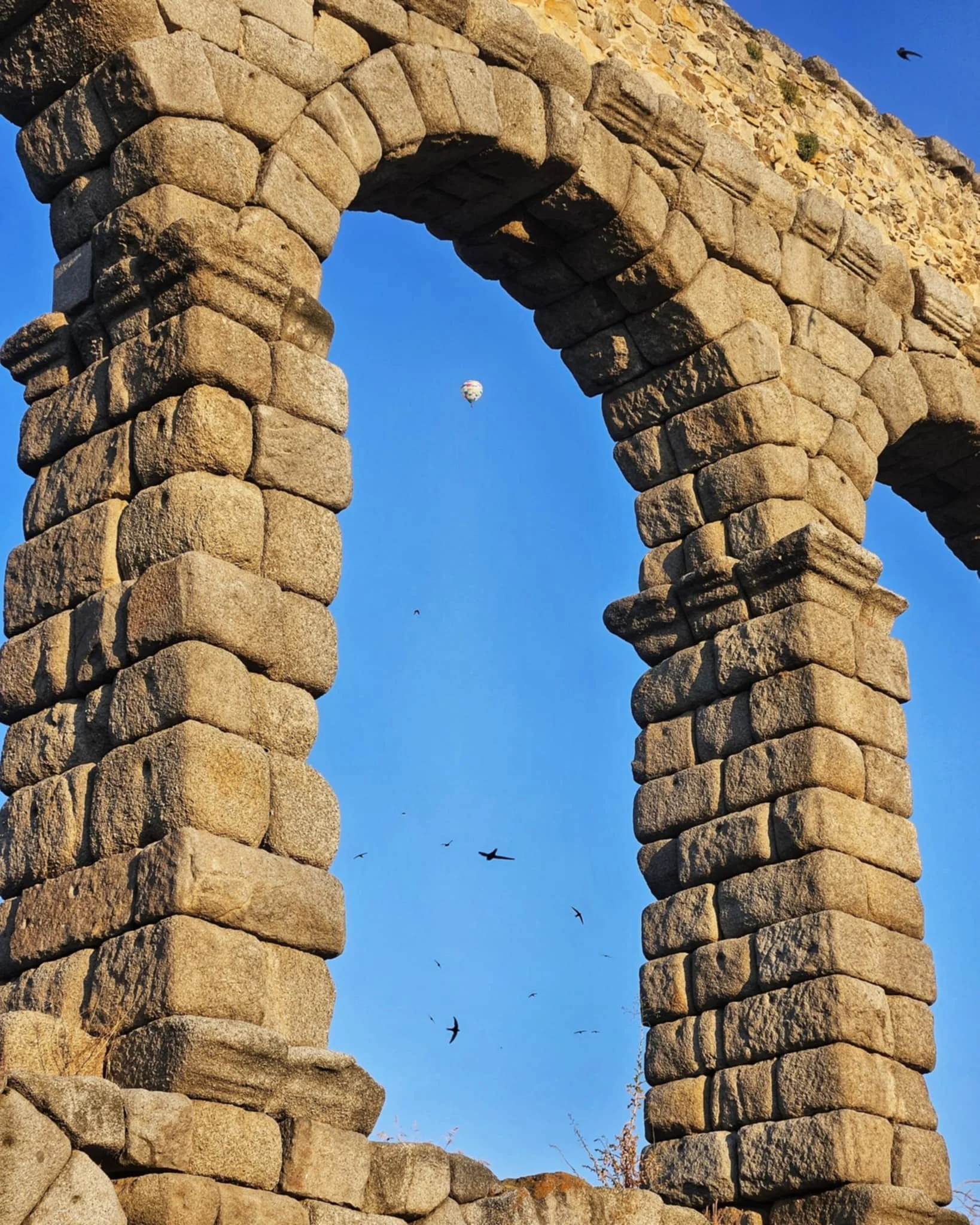
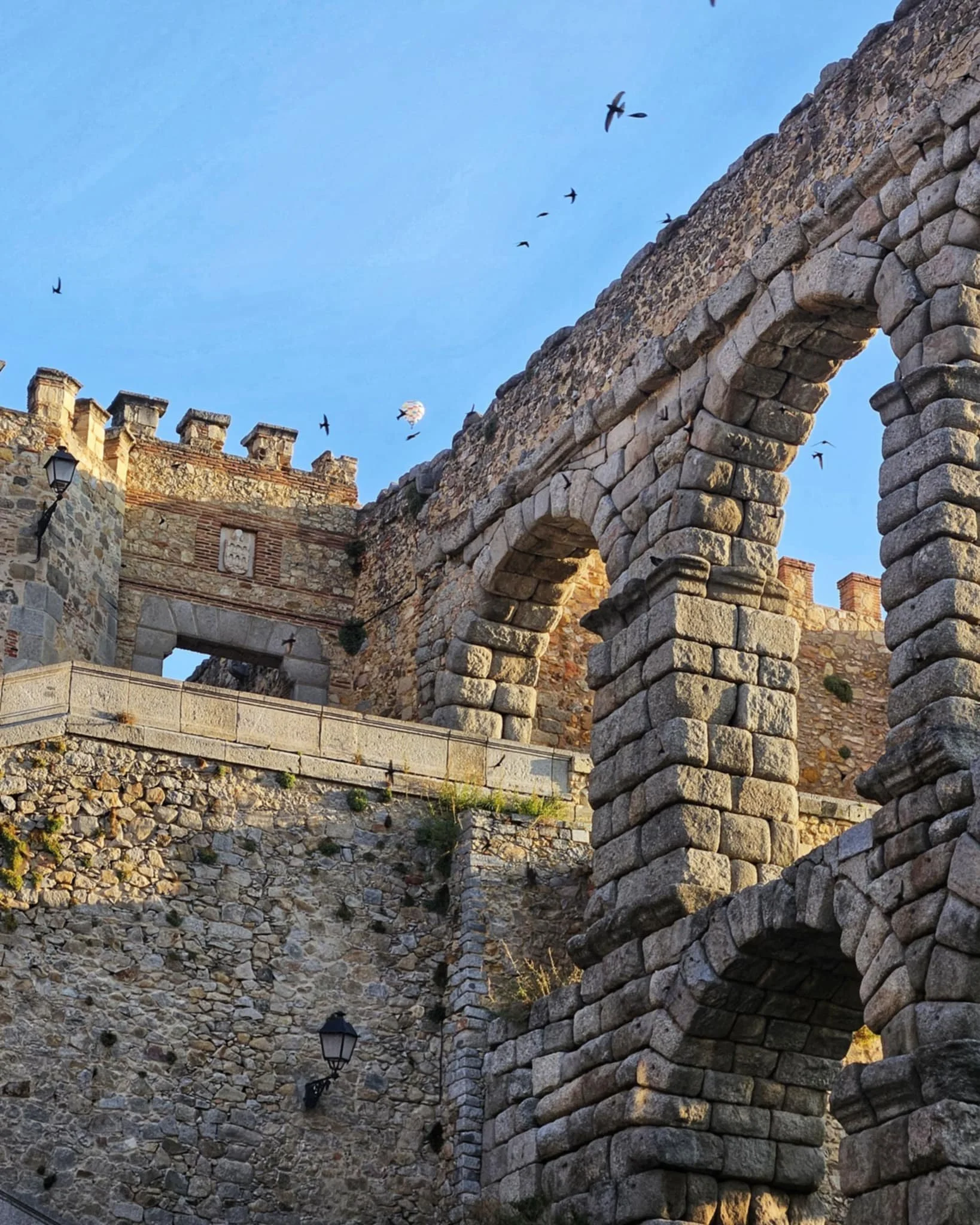
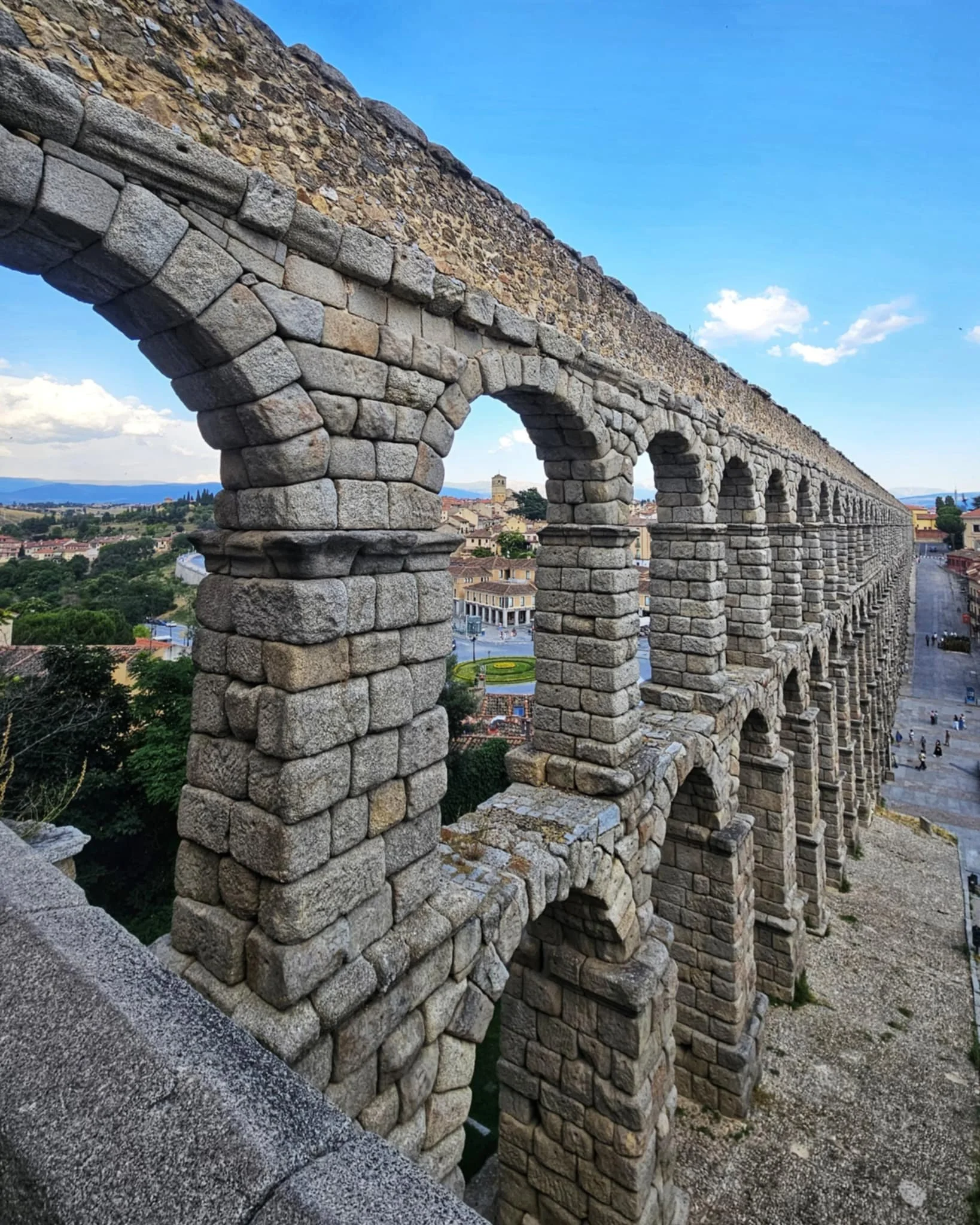
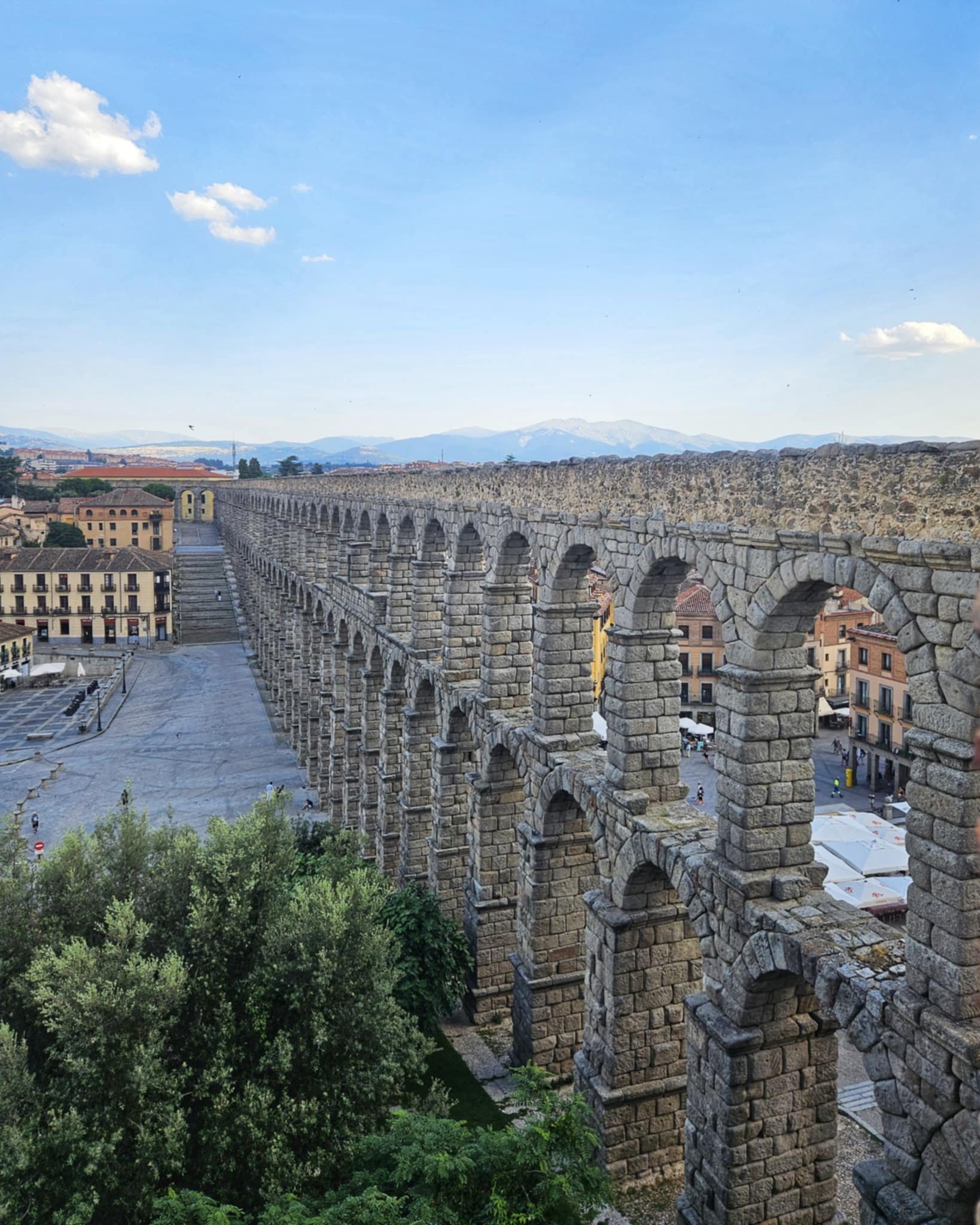
The Aqueduct: 2,000 Years Old & Still Standing
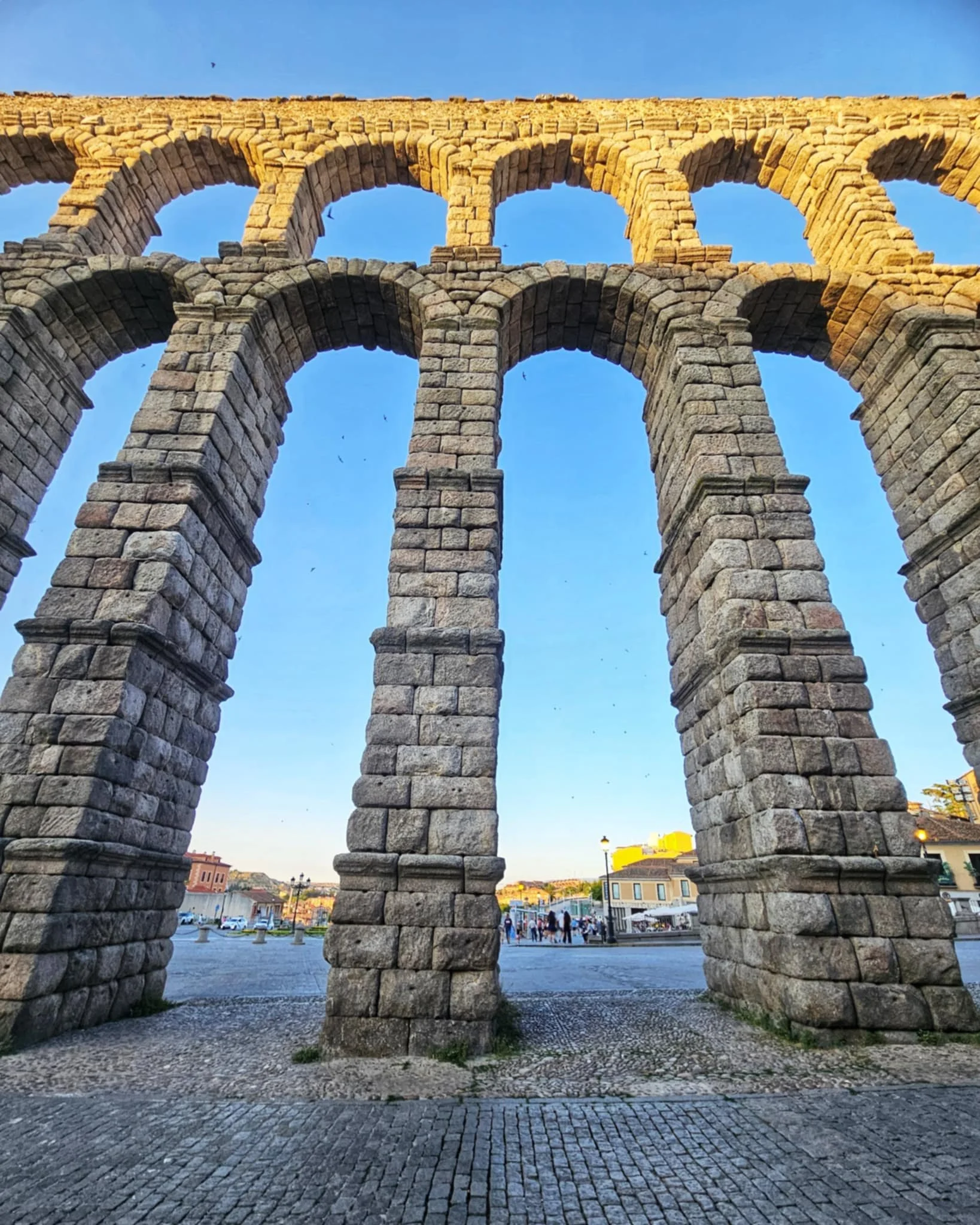
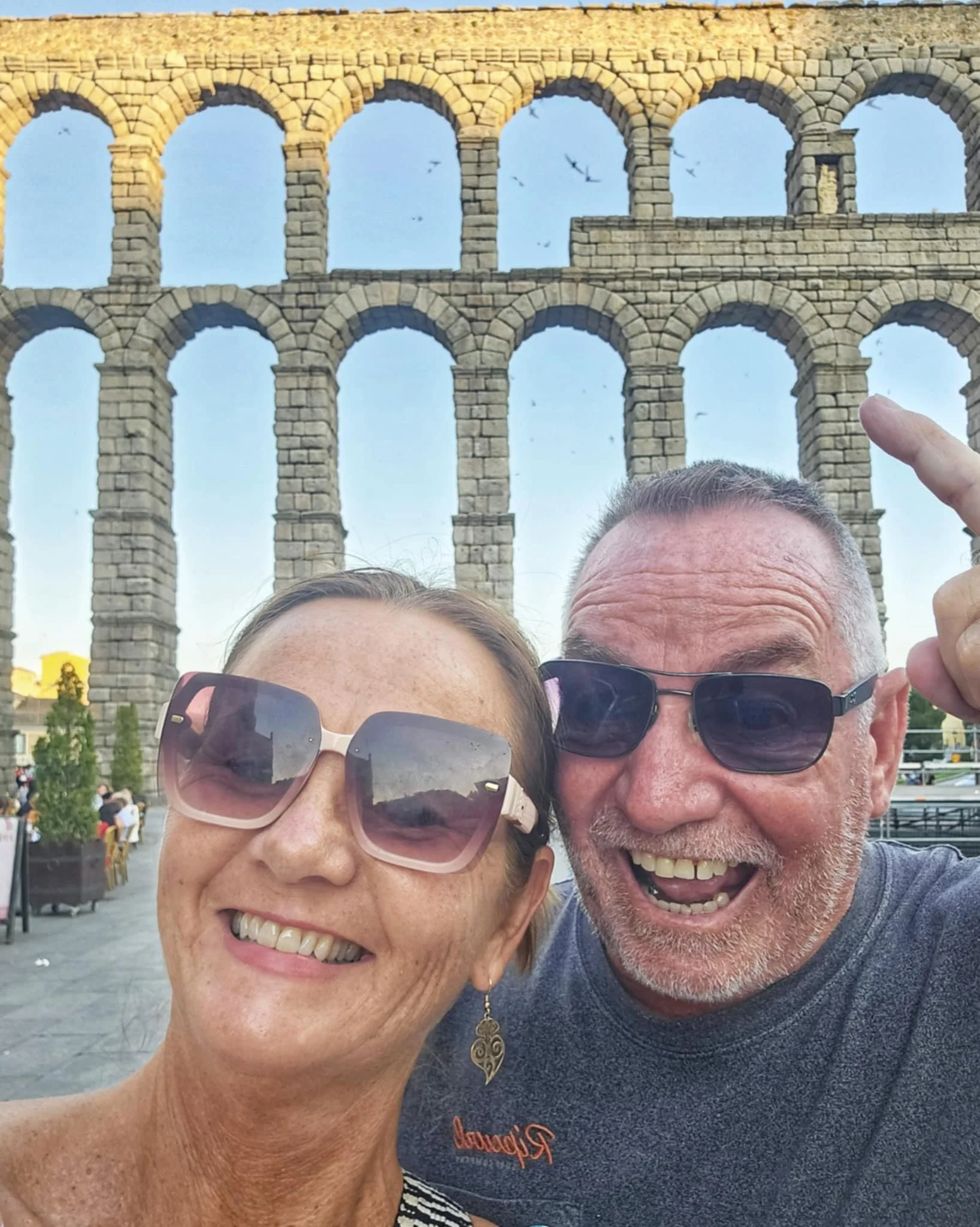
The Roman aqueduct is the reason most people come to Segovia.
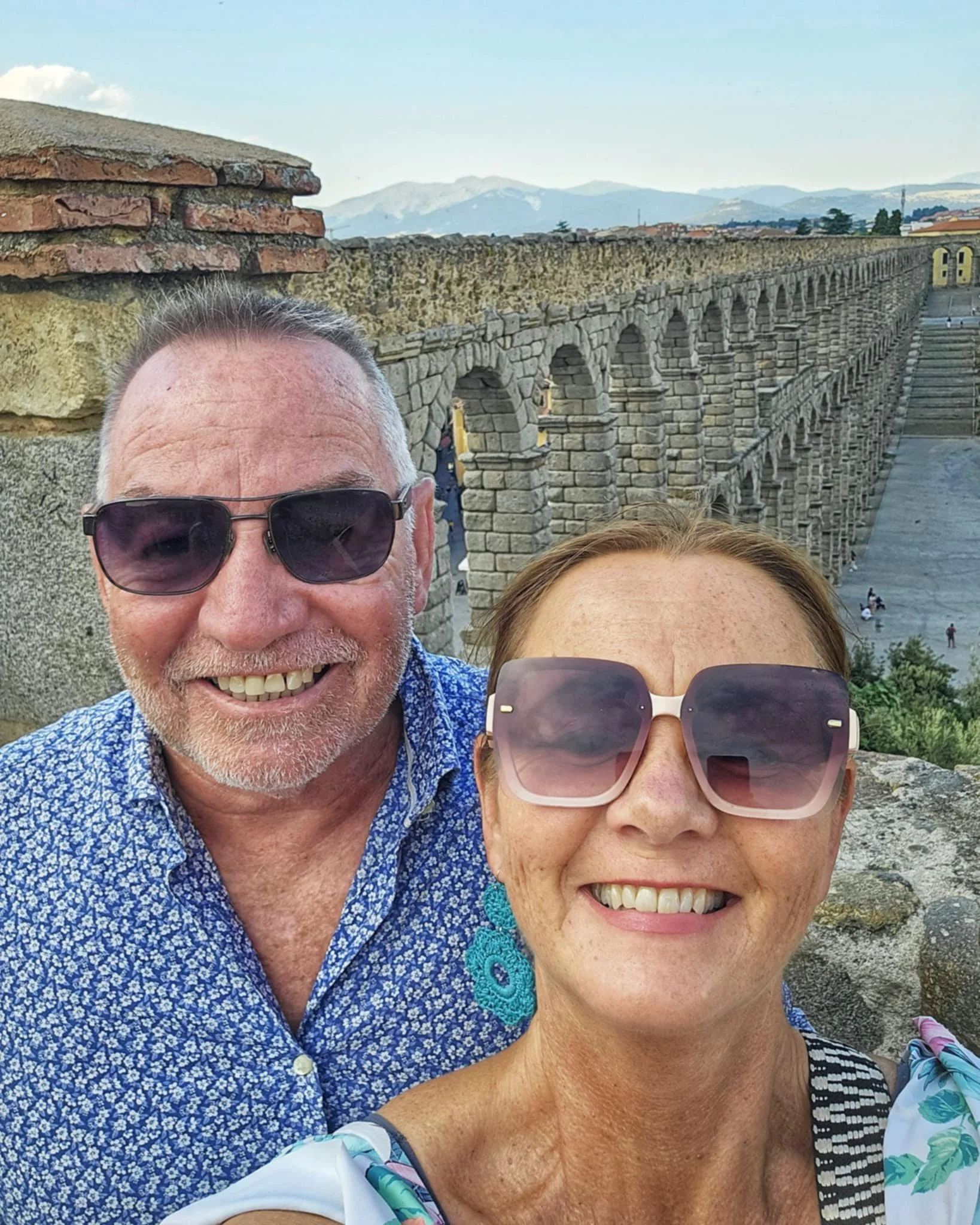
It was built in the late 1st or early 2nd century AD and is one of the best preserved Roman aqueducts in the world.
Here’s what makes it extraordinary:
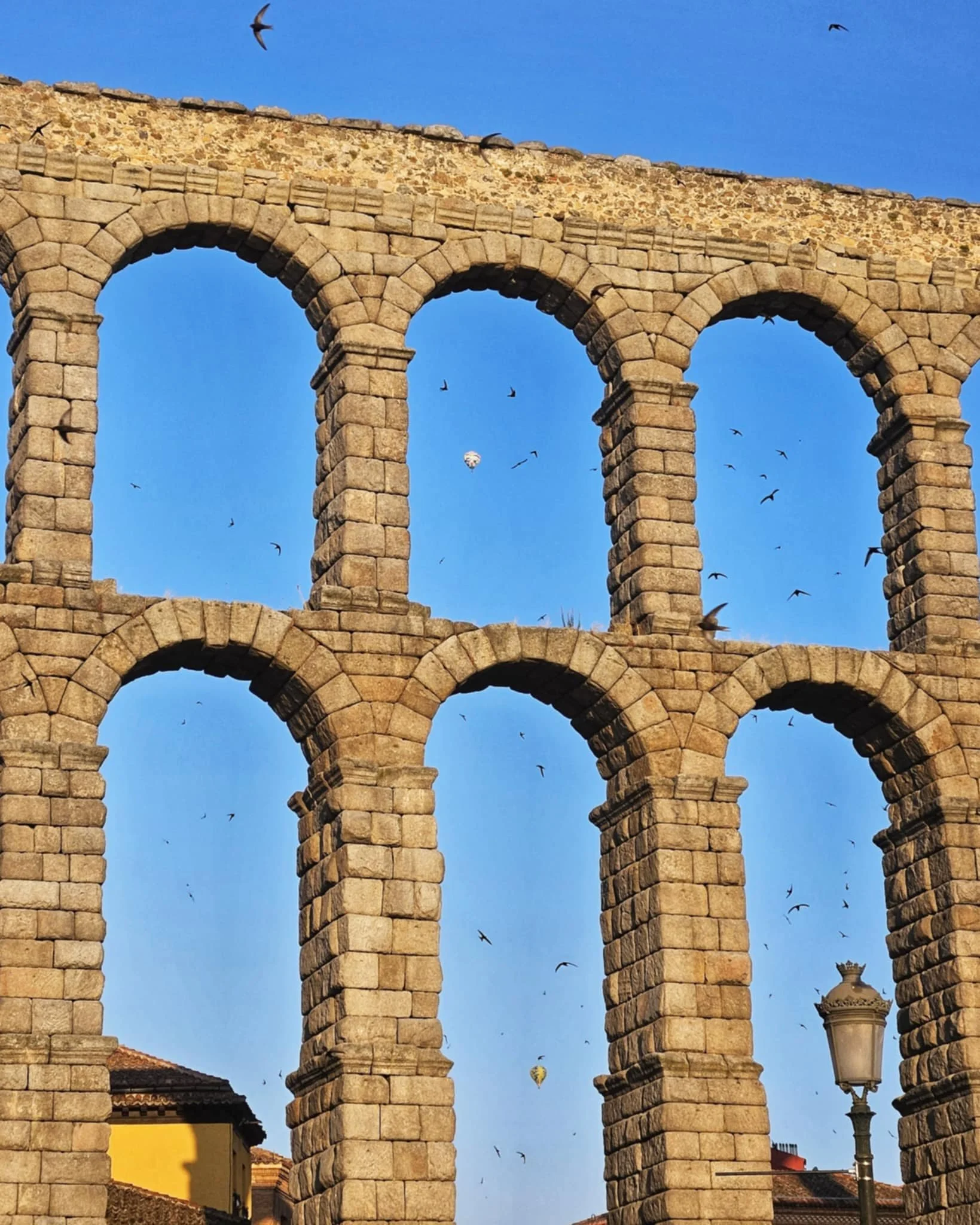
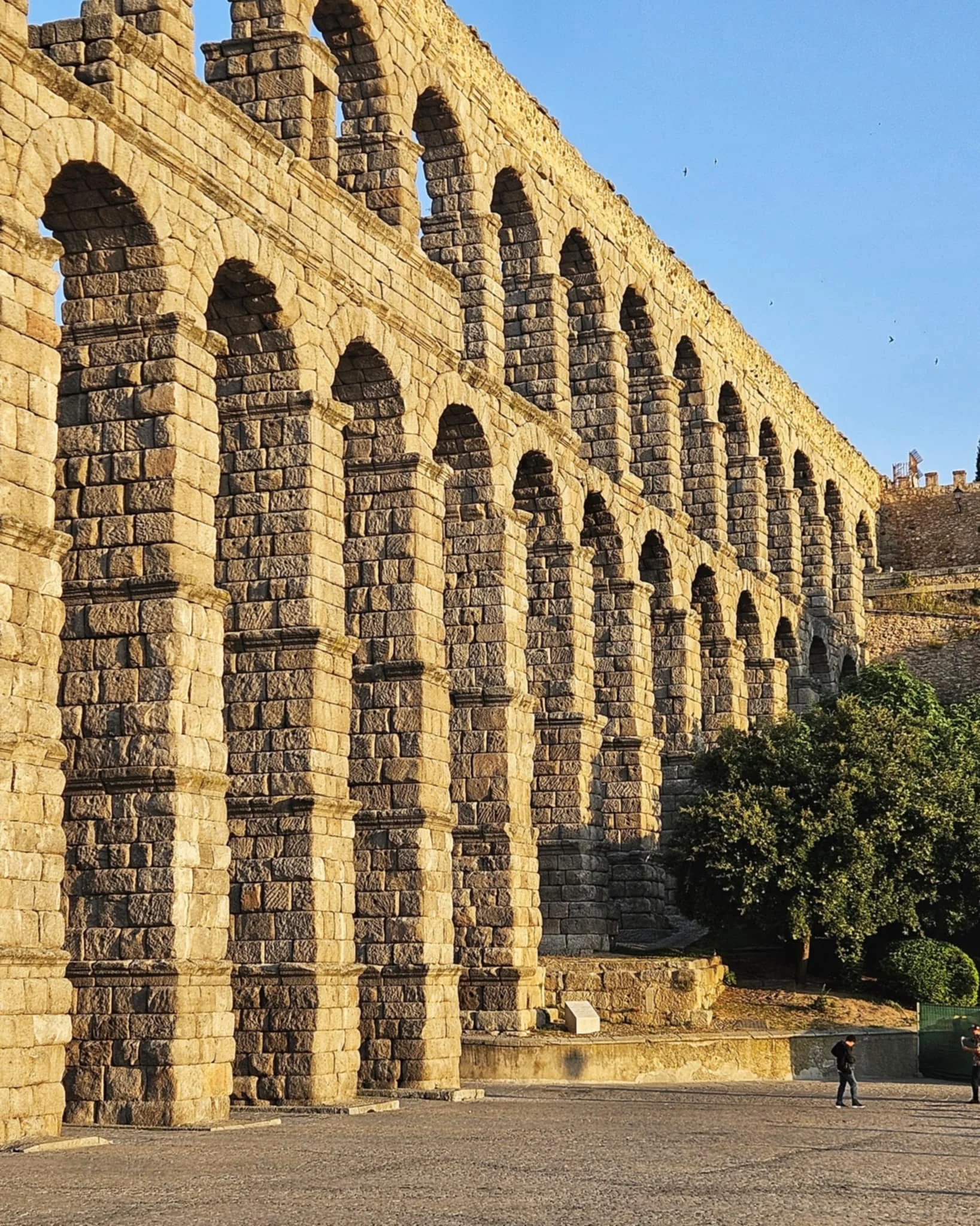
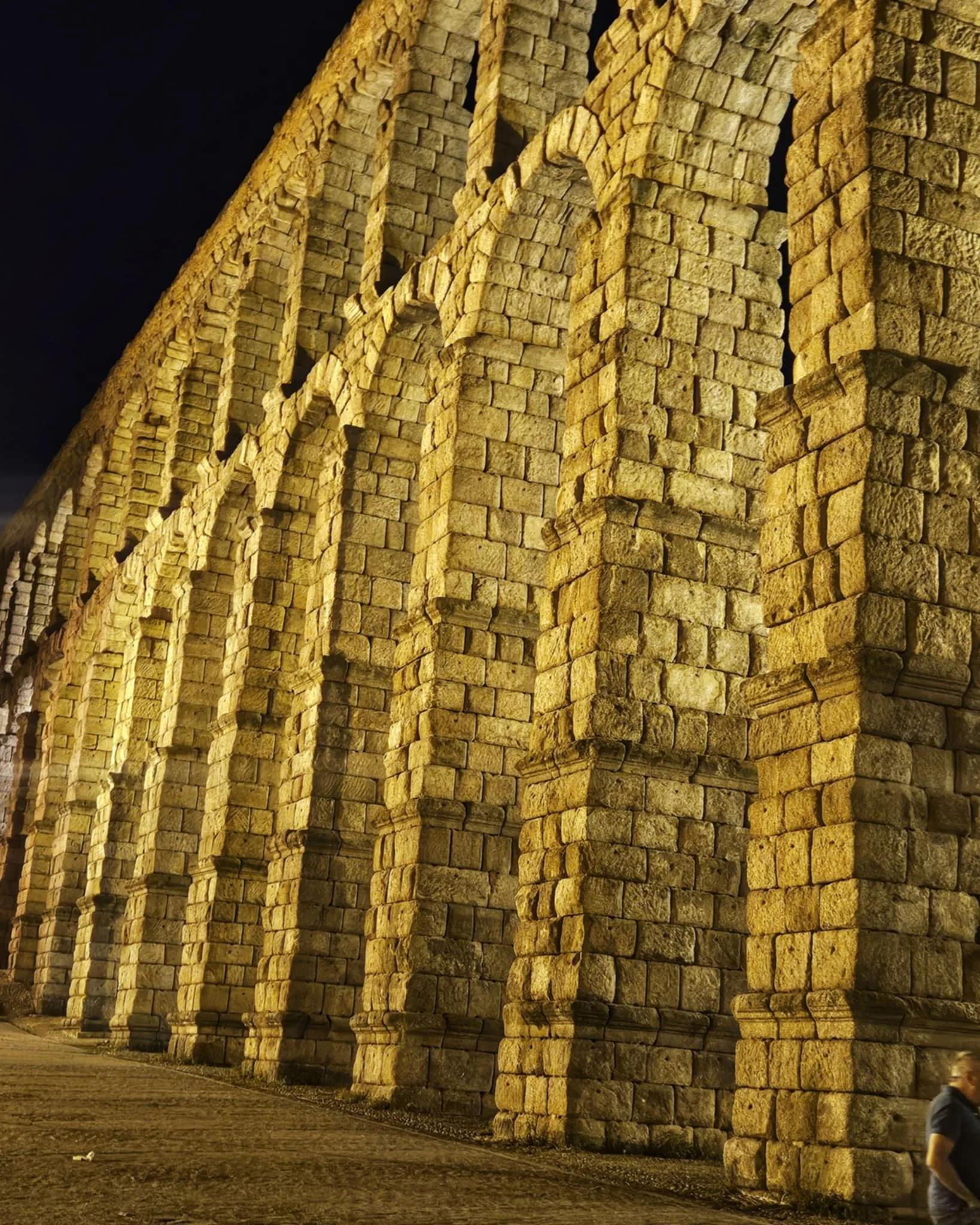
• Around 167 arches
• About 28 metres high at its tallest point
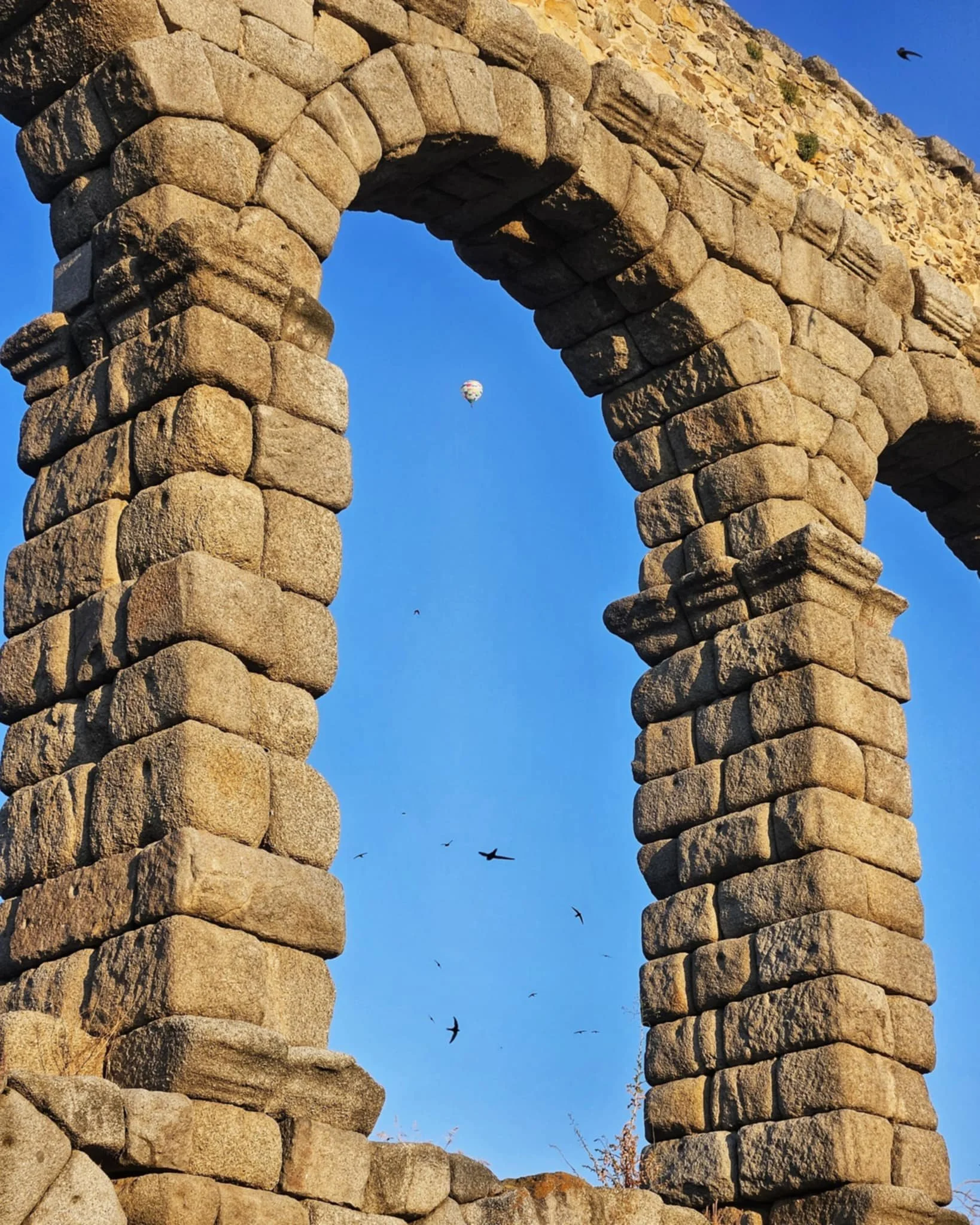
• Built from roughly 20,000 granite blocks
• No mortar. No cement. Just stone perfectly cut and balanced
No glue. Just gravity and genius.
It carried water from the Frío River nearly 17 kilometres into the city. And it worked for centuries.
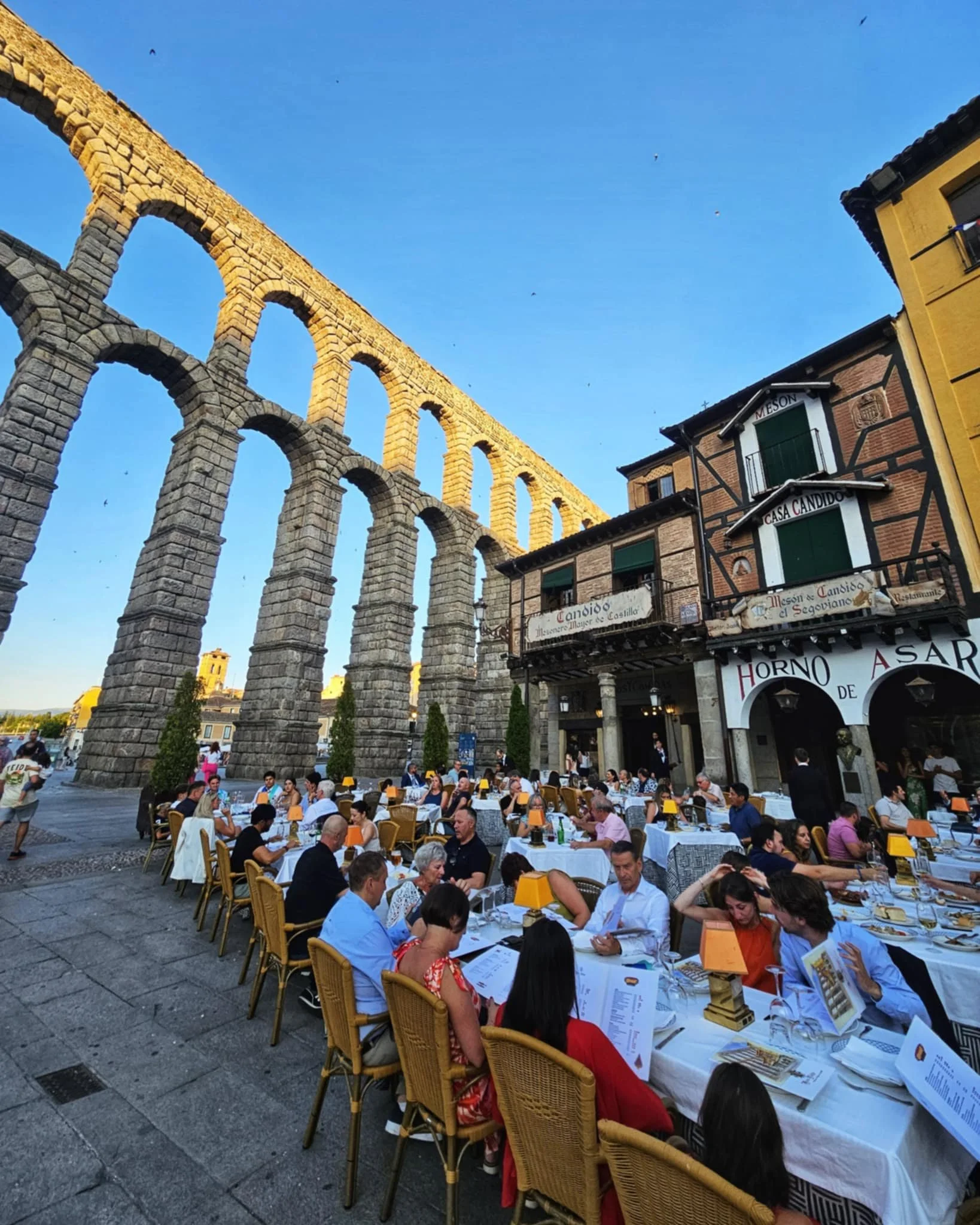
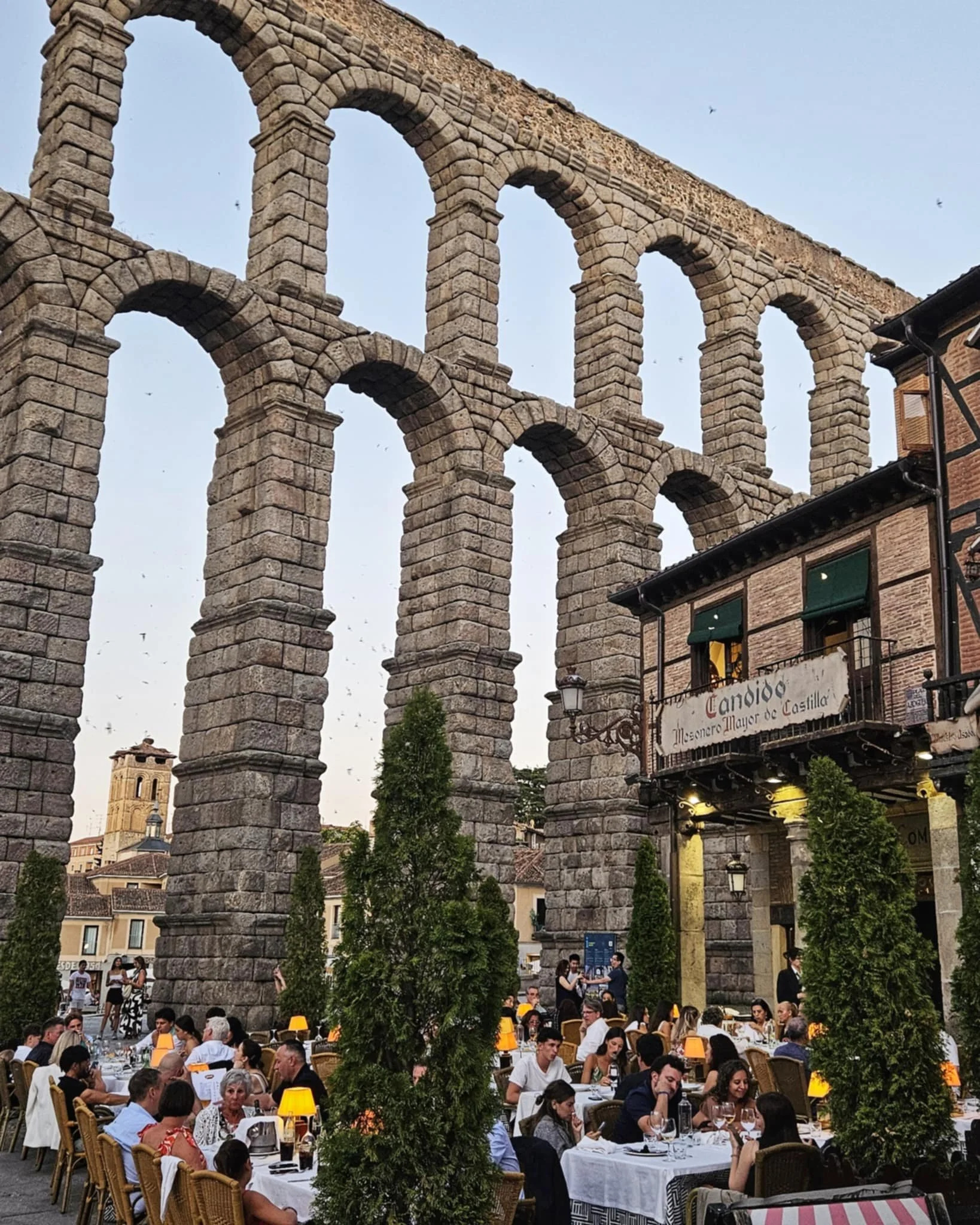
Standing underneath it feels surreal. It’s not roped off. It’s not in a museum. It’s just there. Right in the middle of town. Towering above cafés and people taking photos.
And it changes completely depending on the light.
Early morning, it’s calm and golden.
Midday, it’s bold and sharp against a blue sky.
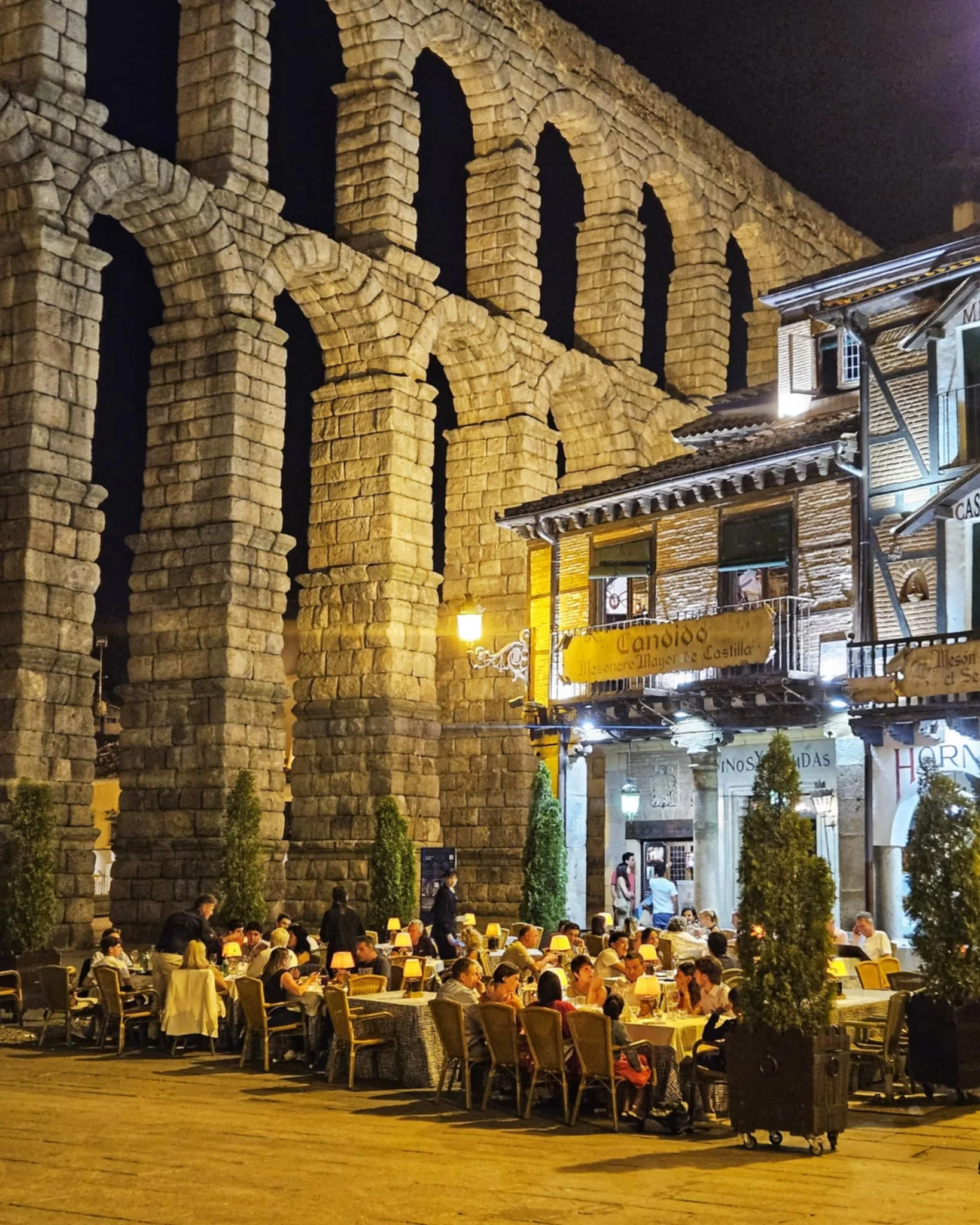
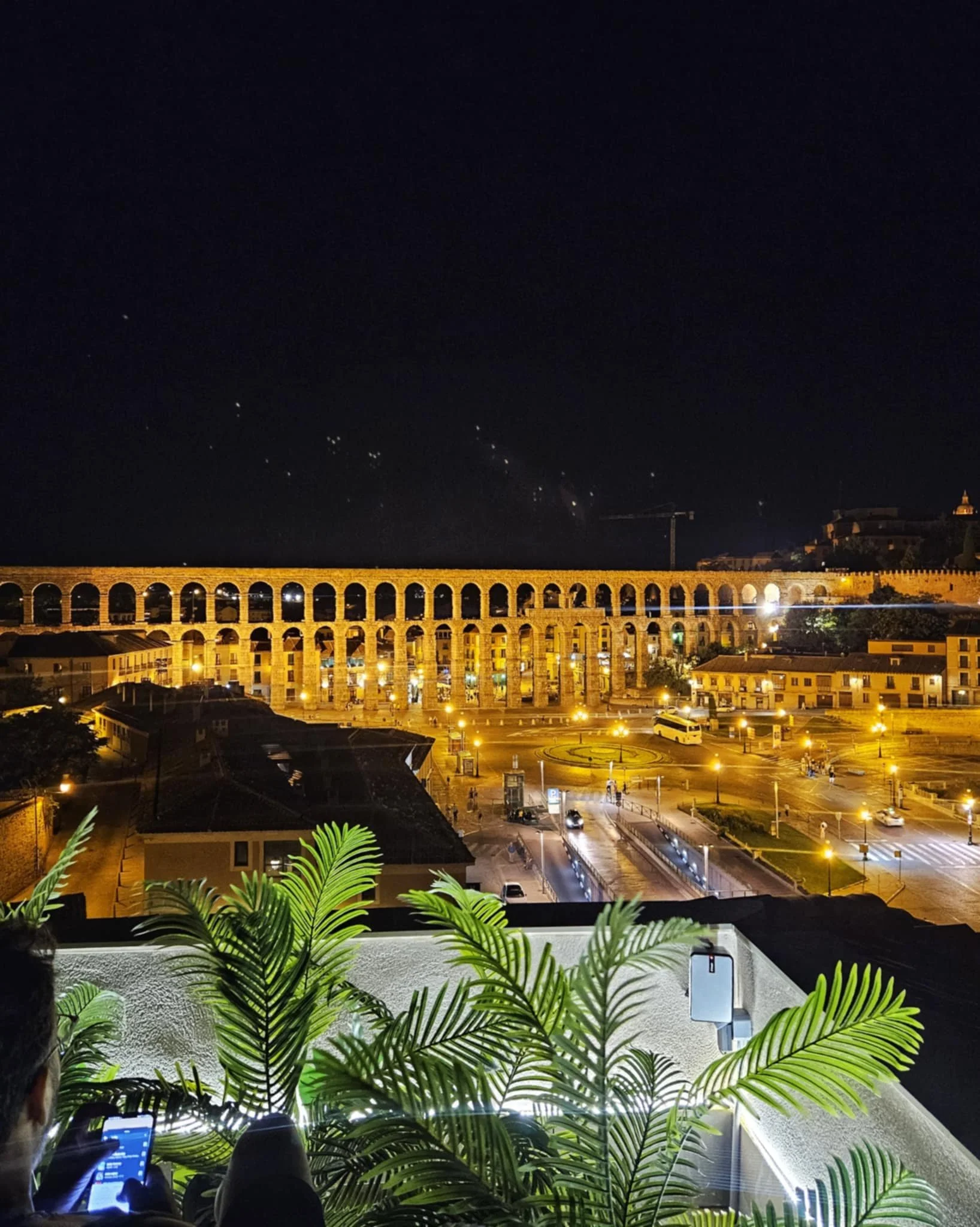
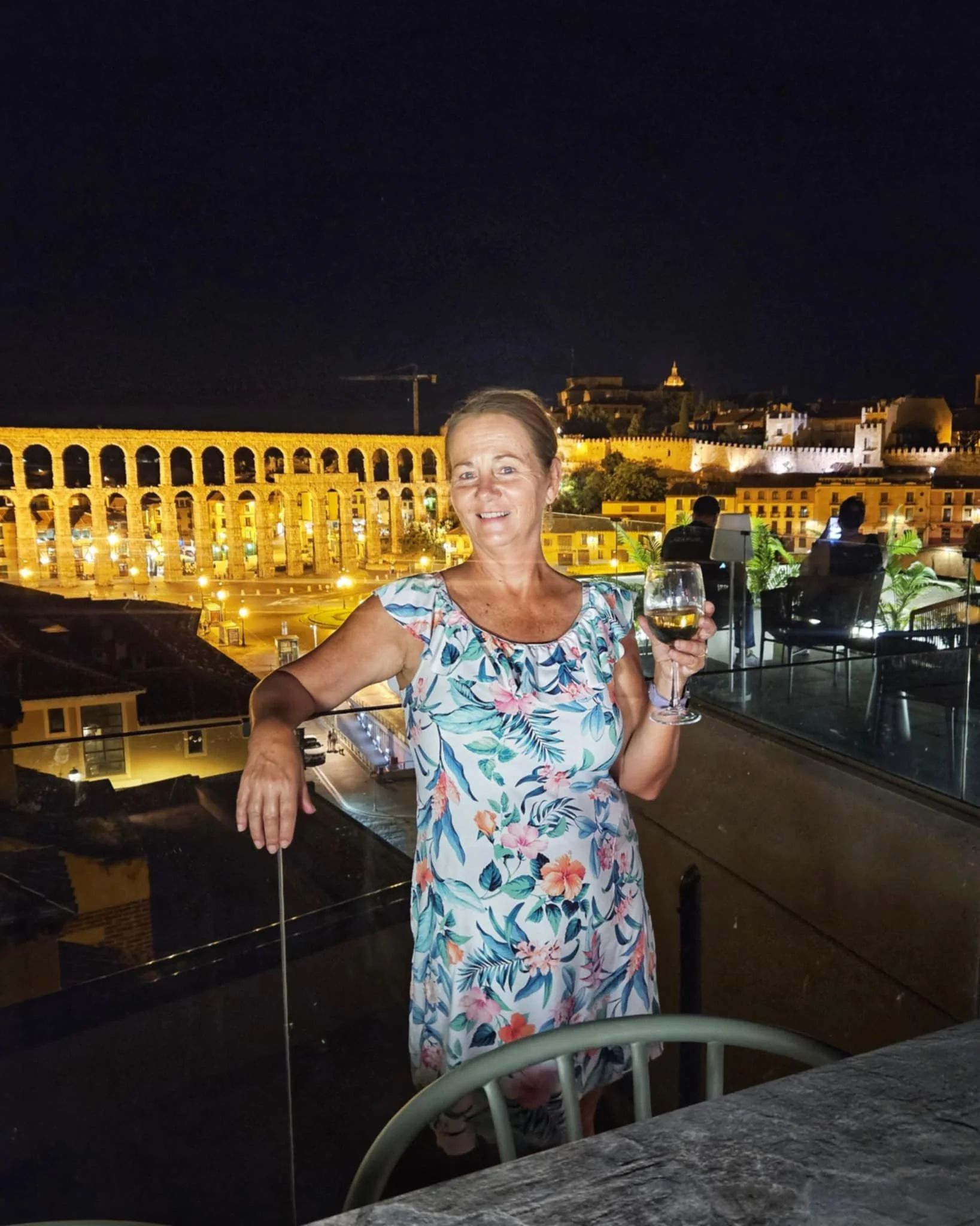
At night, it’s softly lit and almost theatrical.
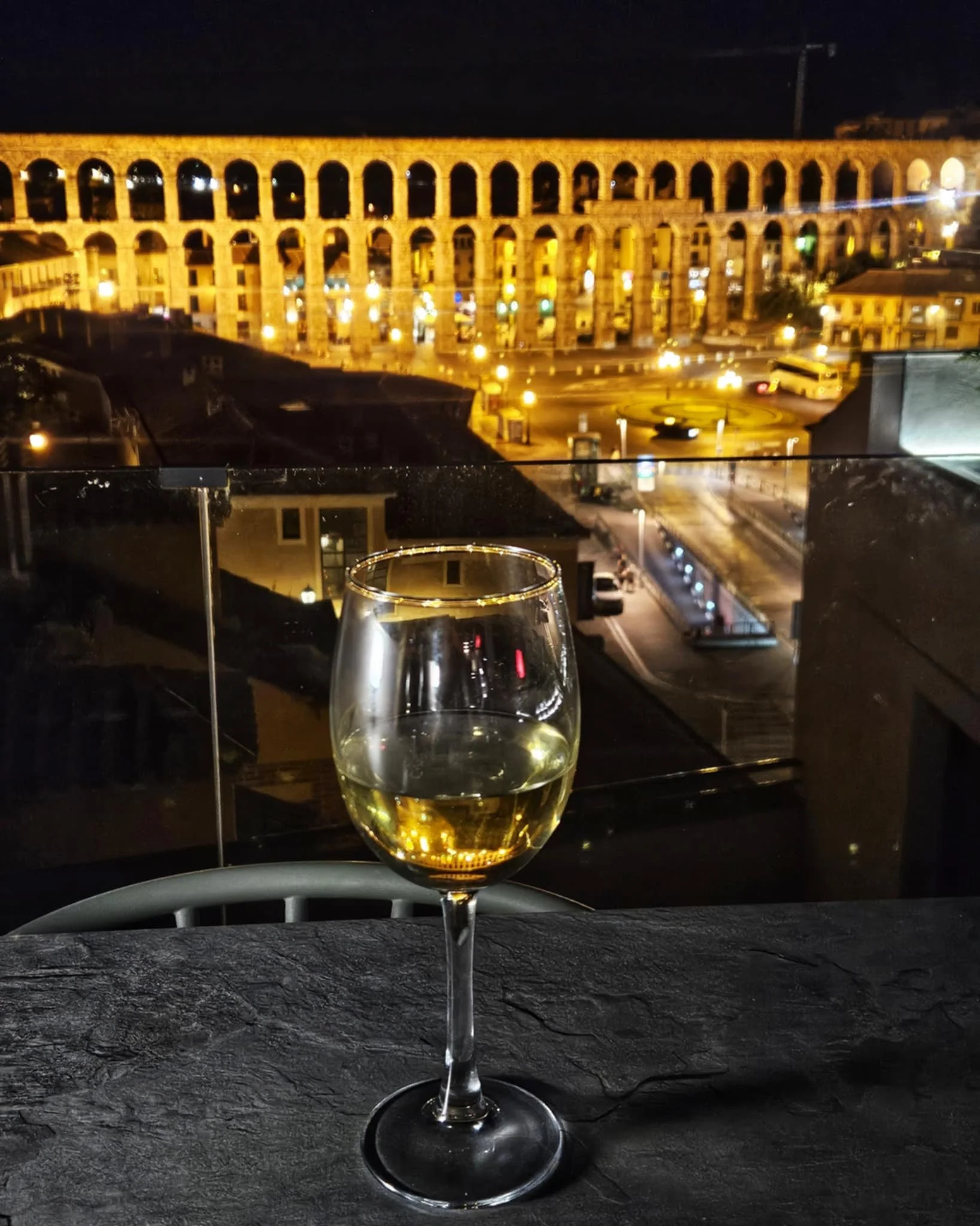
We couldn’t stop looking at it. Especially with a glass of wine in hand from our rooftop bar, watching it glow in the dark. That view alone was worth staying overnight.
The Castle: Straight Out of a Storybook
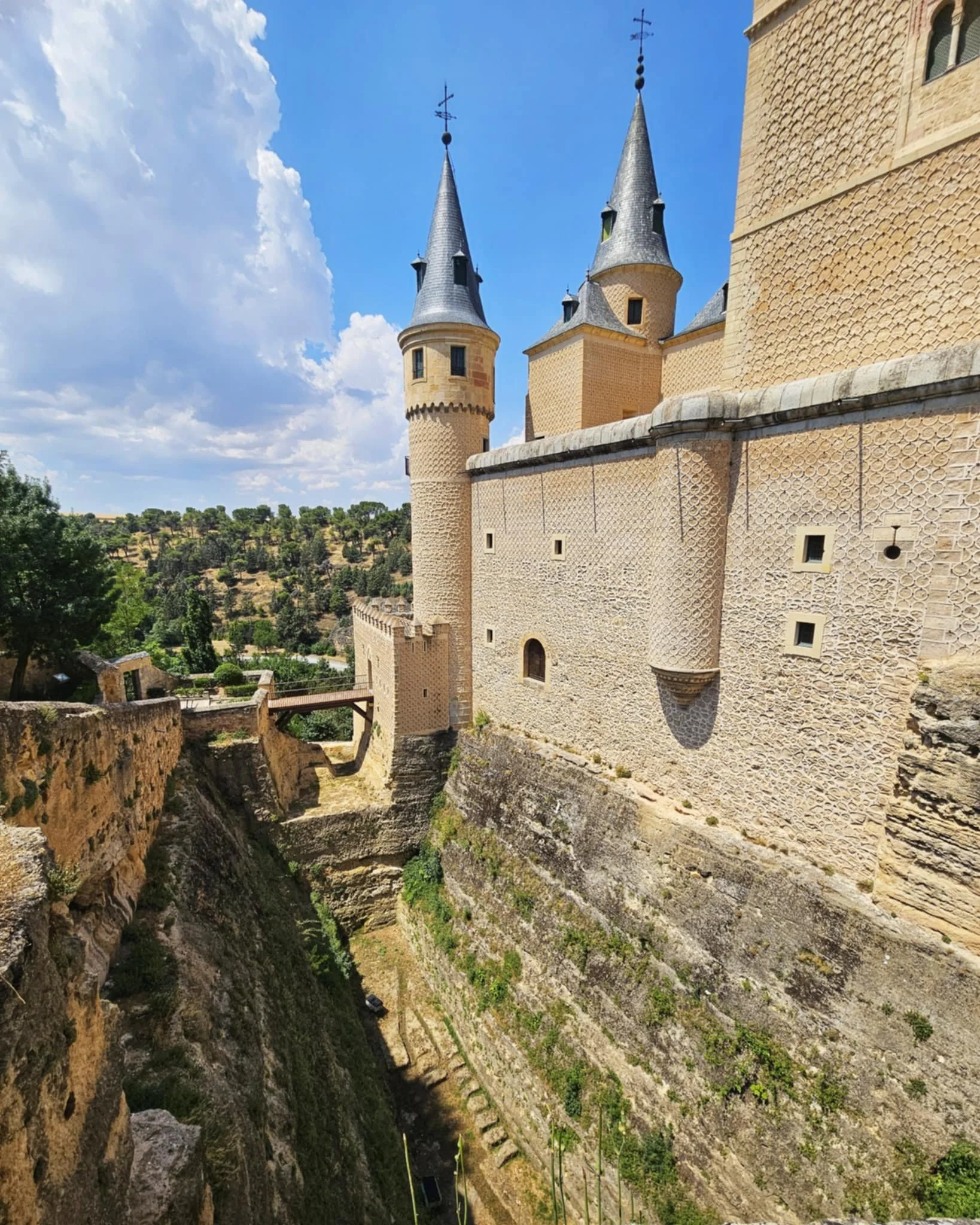
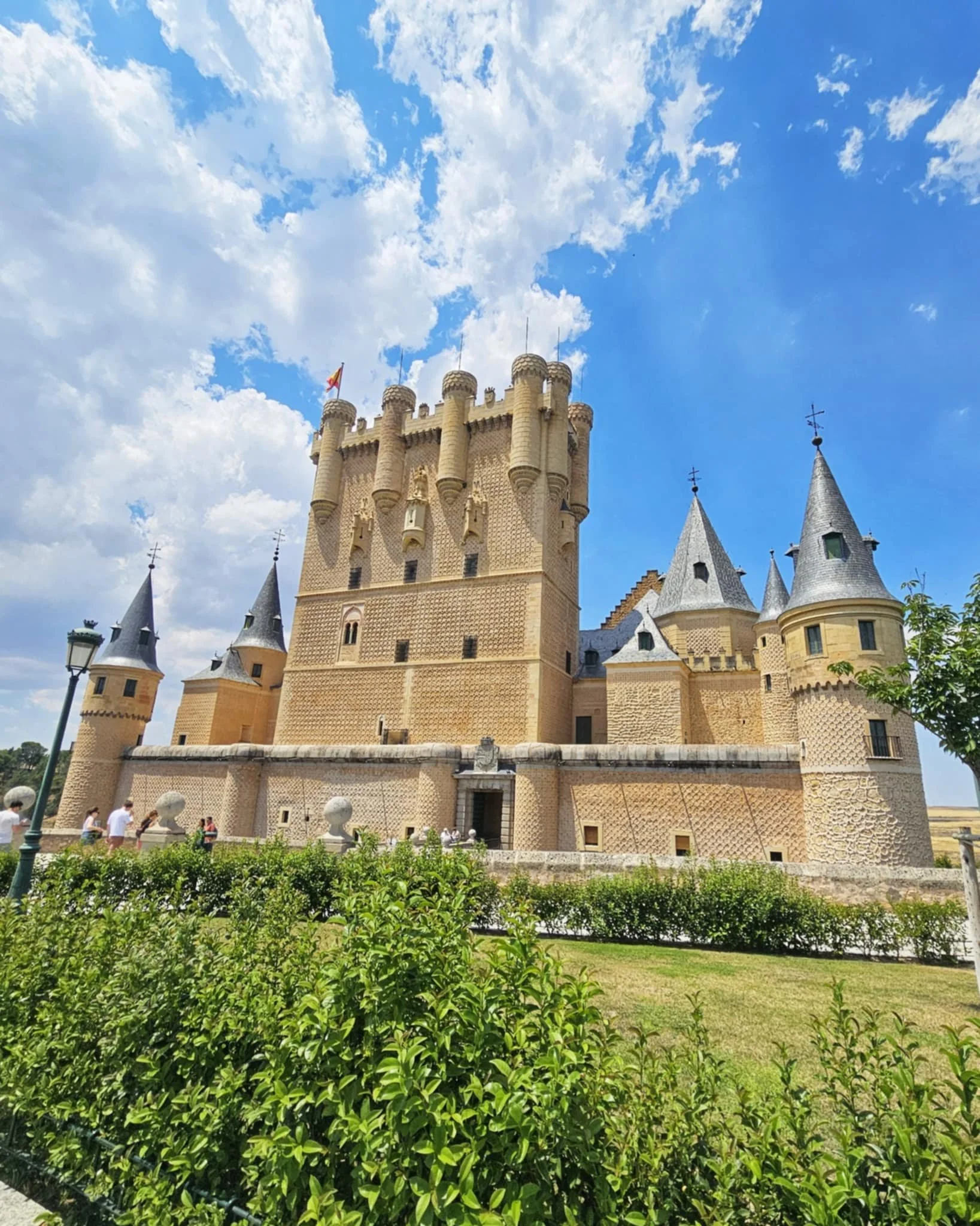
At the far end of town sits the fairy-tale fortress, Alcázar of Segovia.
It rises dramatically above the countryside, perched on a rocky crag. Turrets. Towers. Slate roofs. It genuinely looks unreal.
It began as a Roman fort, was rebuilt in the Middle Ages, and became a royal palace. Queen Isabella I was proclaimed Queen of Castile here in 1474. Later, it served as a state prison and then a military academy.
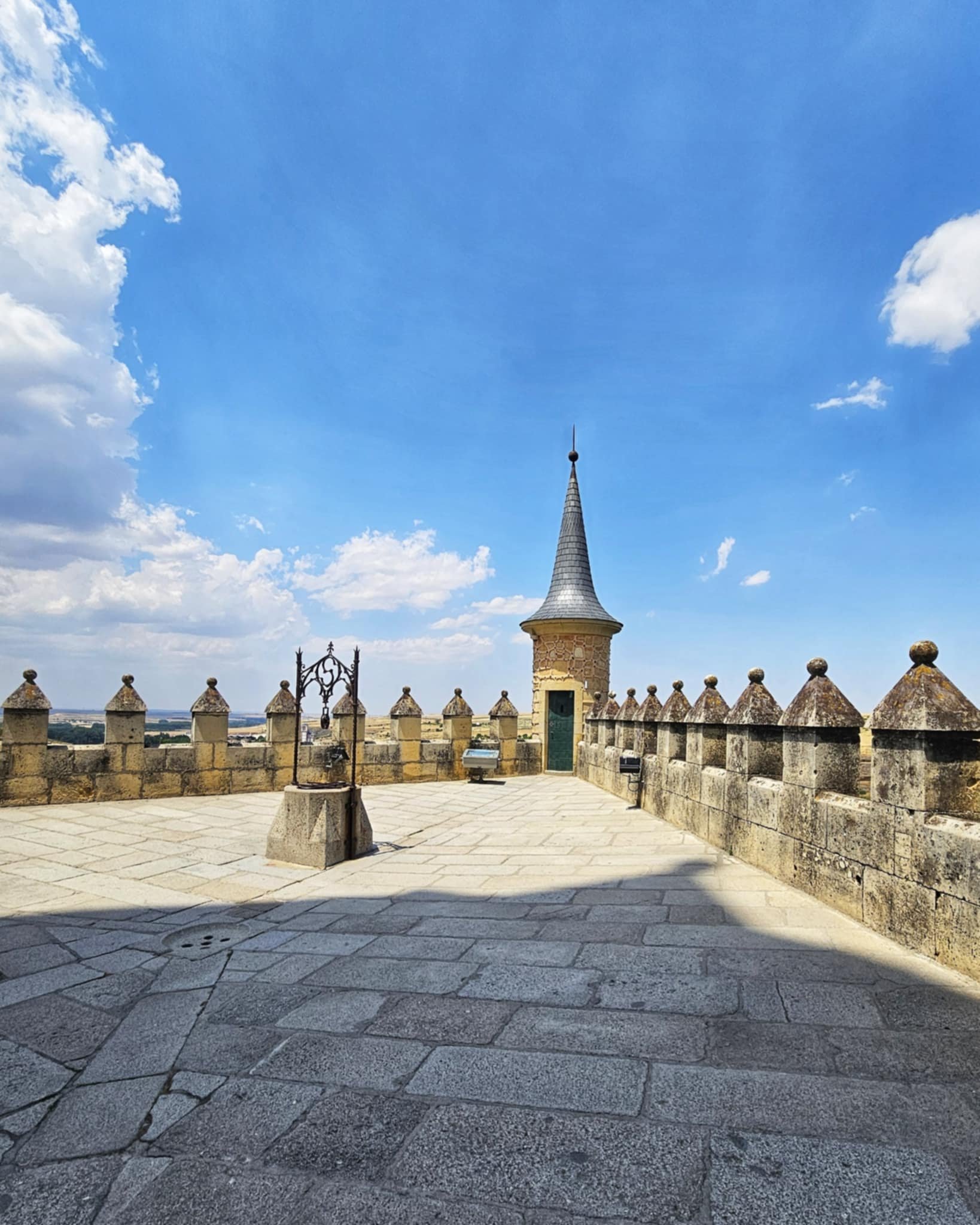
You can tour the interior rooms and climb the Tower of Juan II for sweeping views over the surrounding countryside. Tickets are purchased near the entrance and it’s very straightforward.
The views from the top are worth every step.
Wandering the Streets: Plaza Mayor, Cathedral & Roast Pig
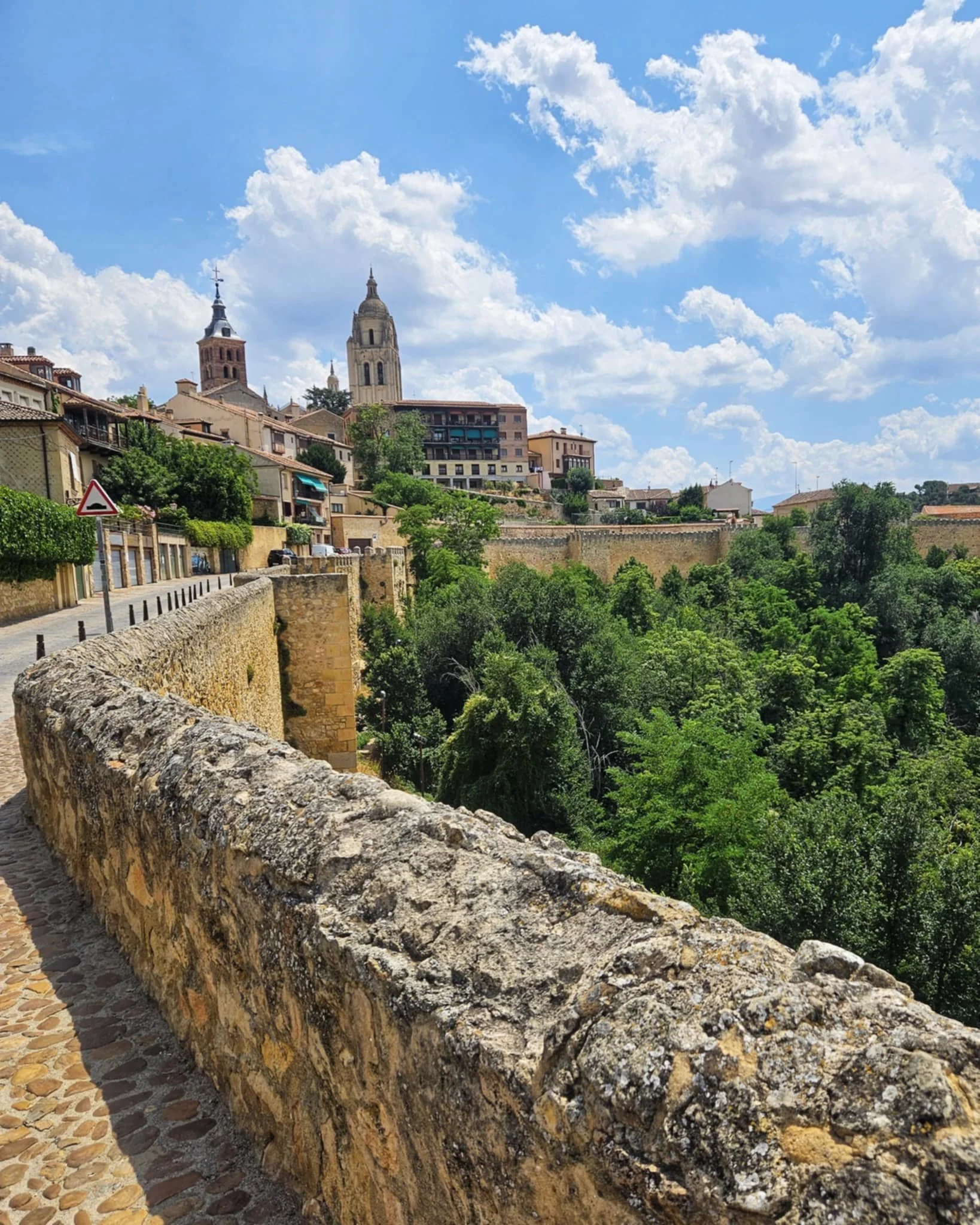
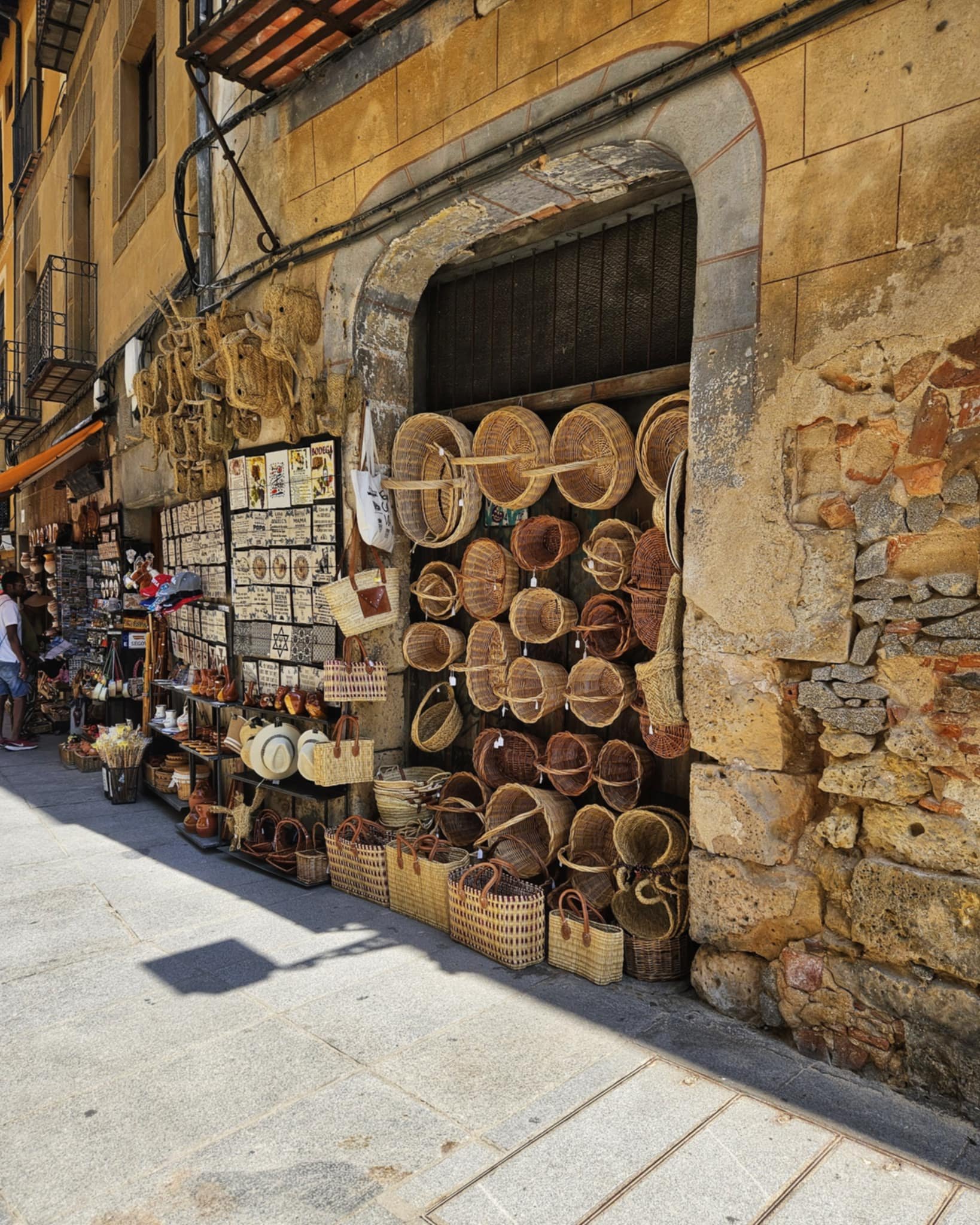
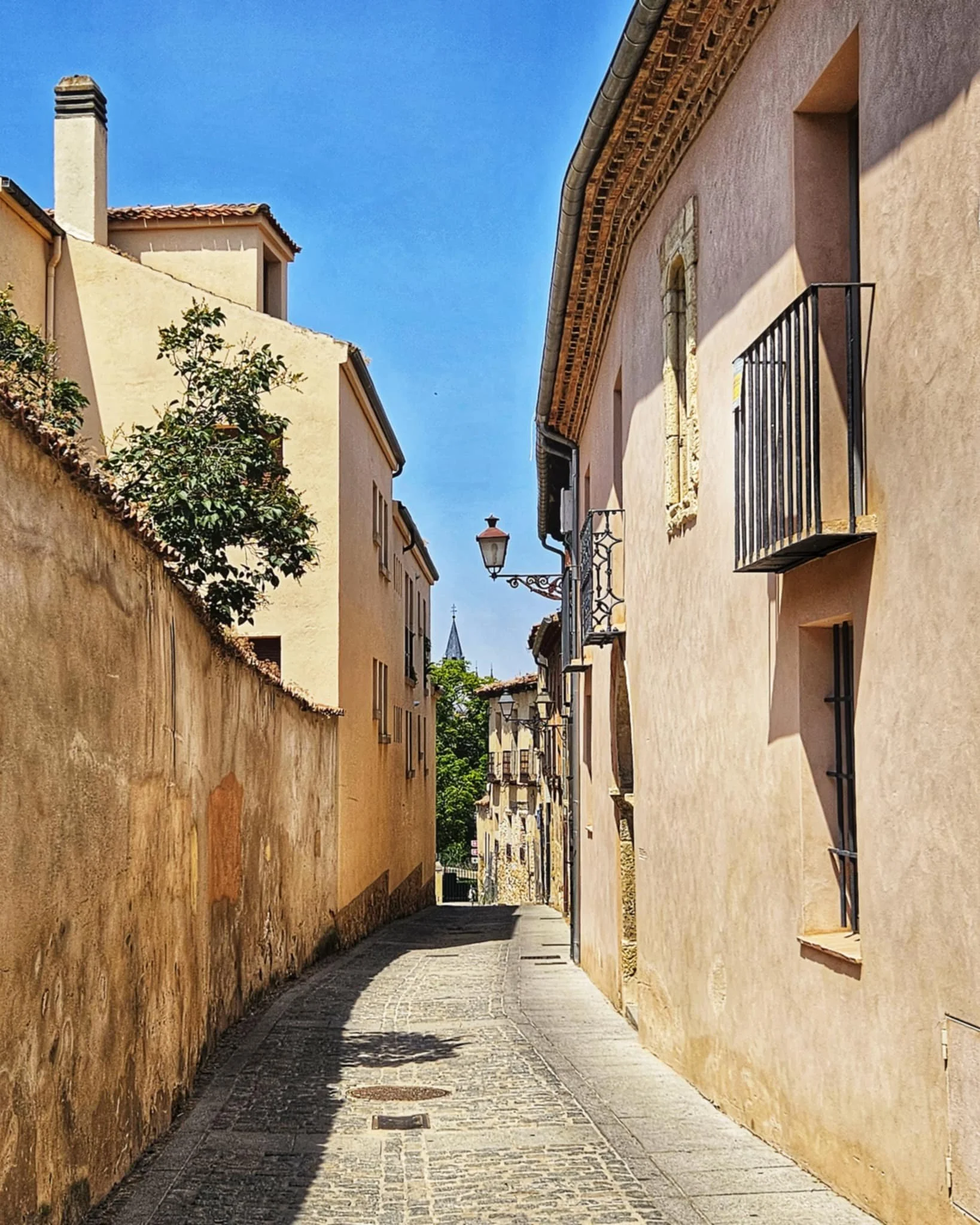
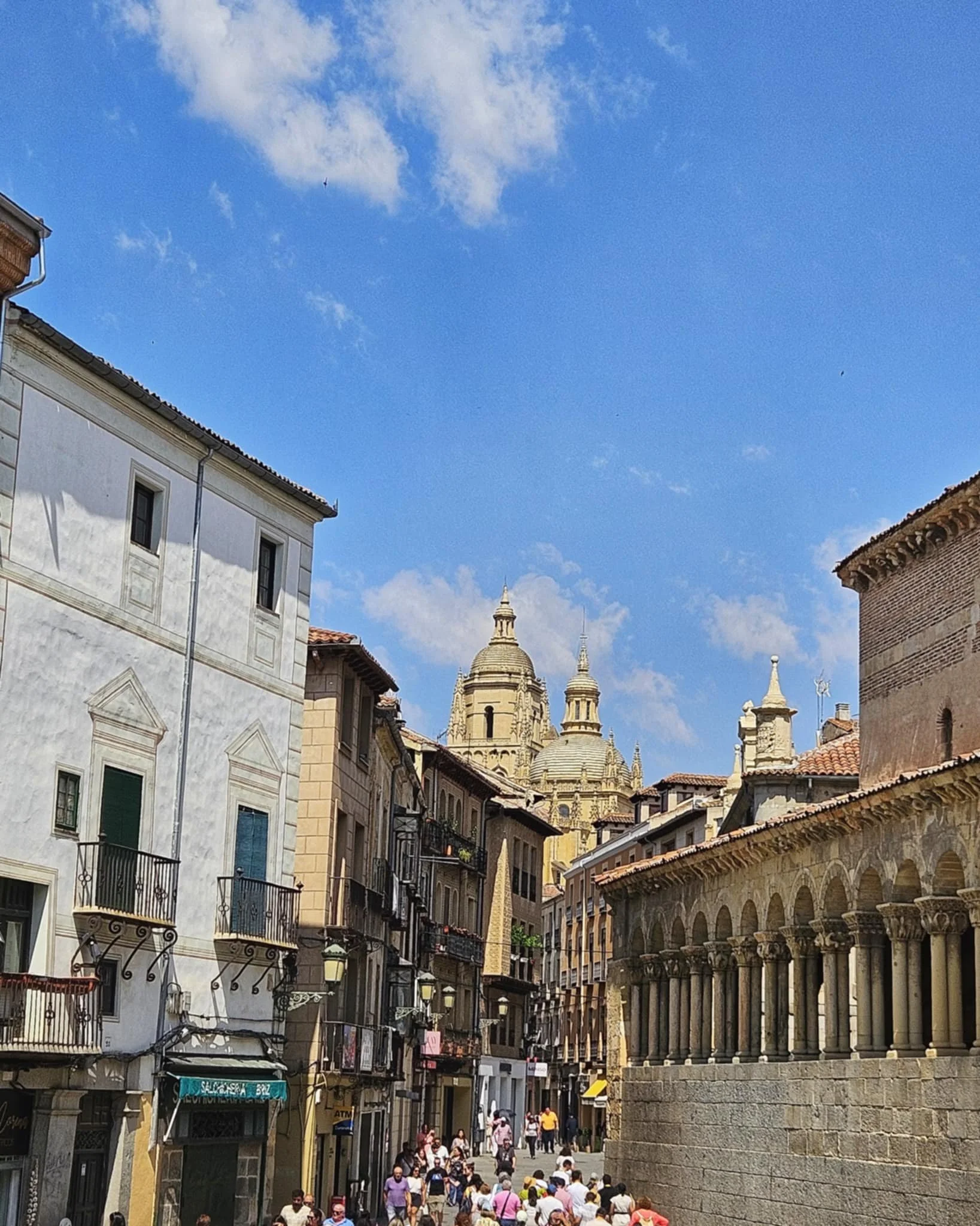
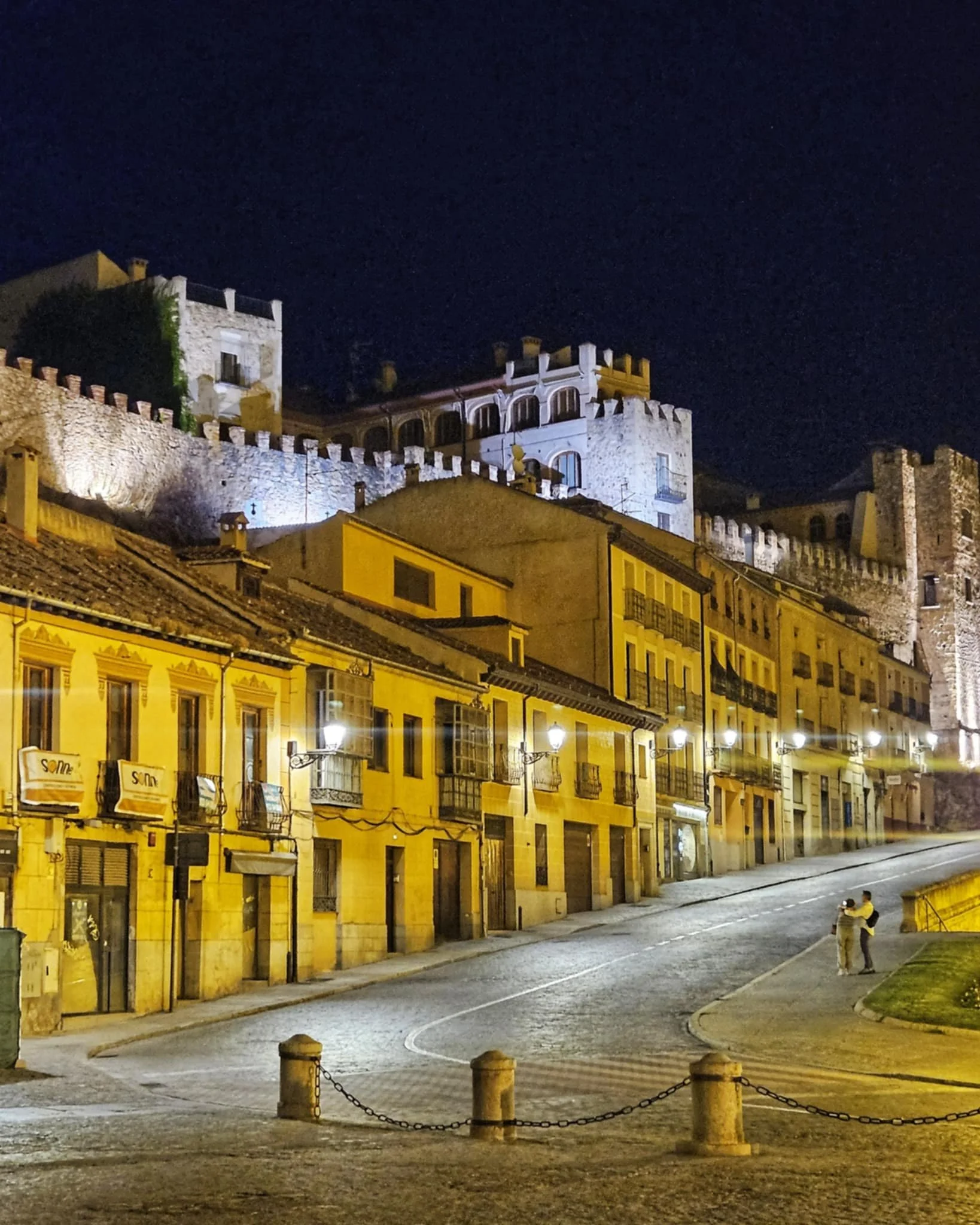
From the aqueduct, you walk uphill through cobbled streets towards the old town.
Segovia is compact. Easy to walk. No frantic city energy.
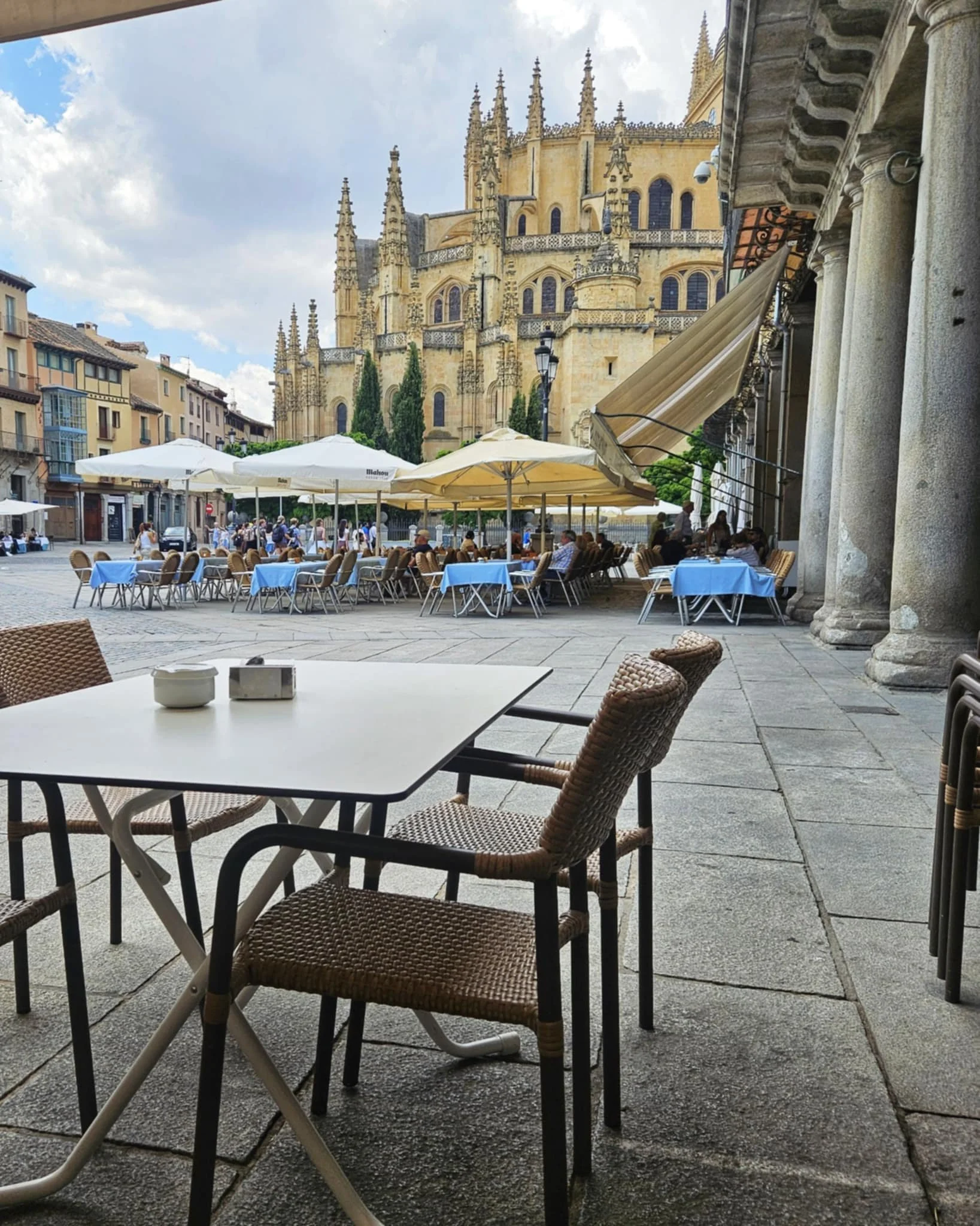
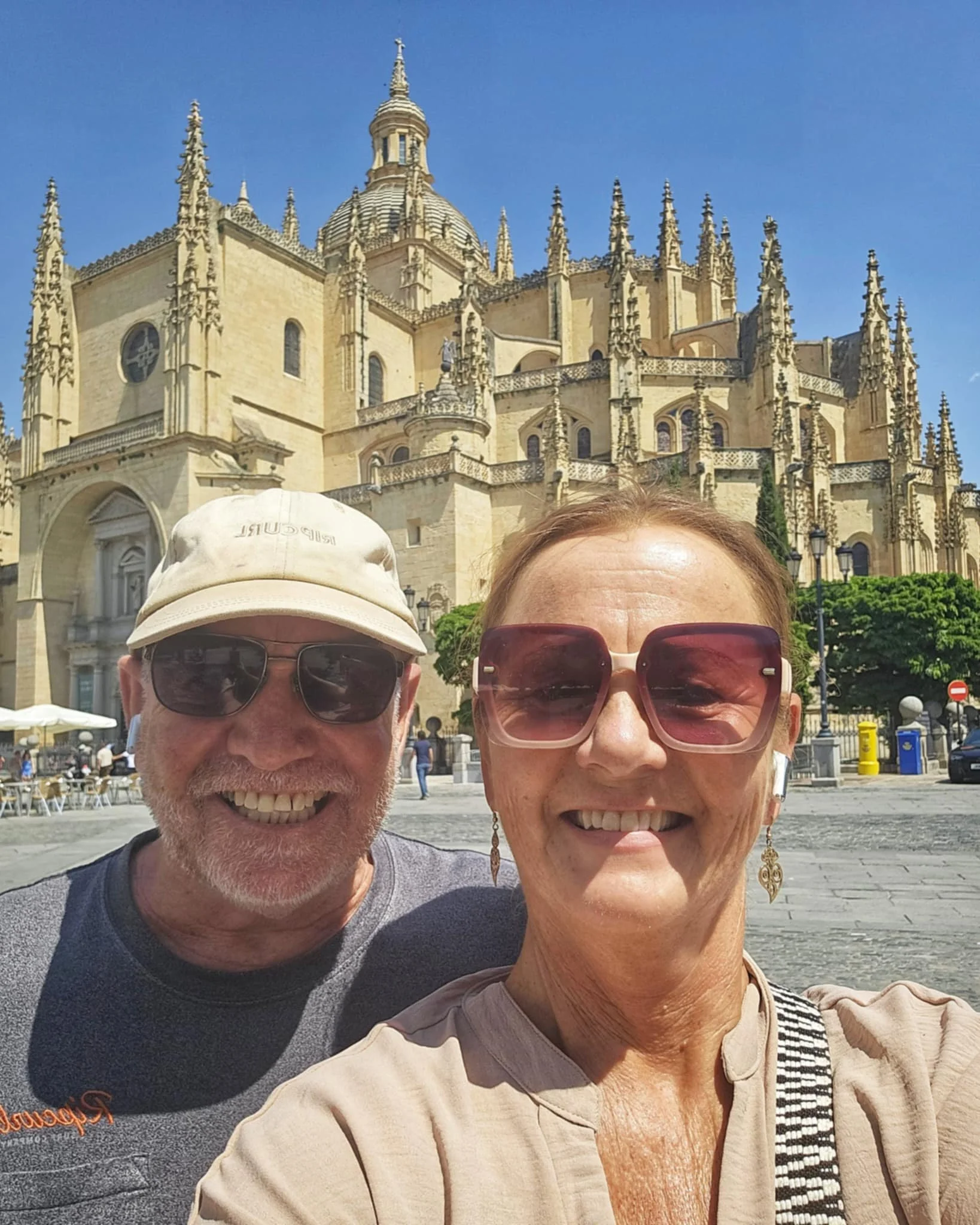
The heart of it all is Plaza Mayor. It’s lively without being overwhelming. Cafés spill into the square. Locals chat. Visitors sit longer than they meant to.
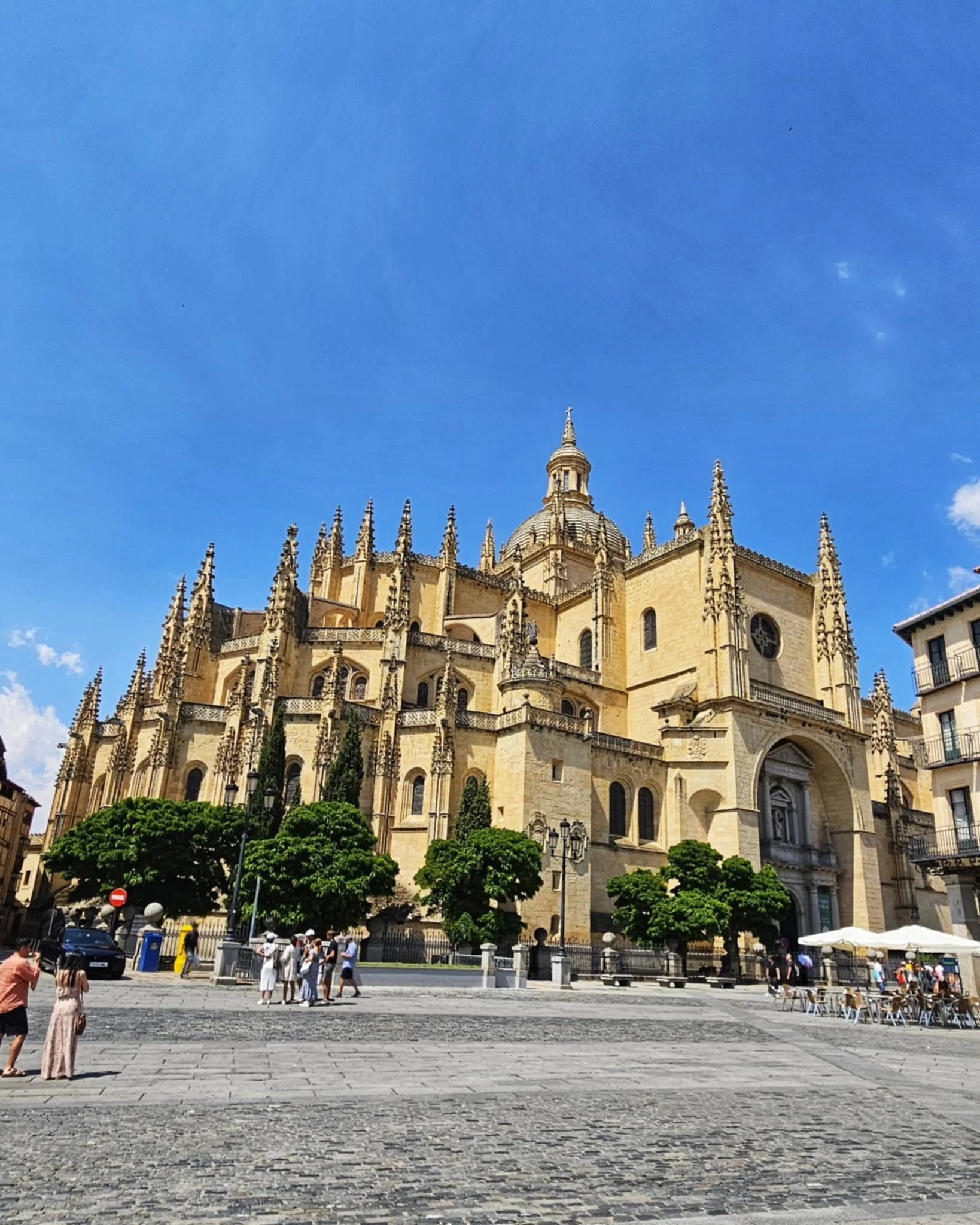
The cathedral dominates the plaza. Officially called the Cathedral of Segovia, it’s one of the last great Gothic cathedrals built in Spain. Locals call it “The Lady of Cathedrals.” It’s elegant, light-filled and worth stepping inside.
And then there’s the food.
Segovia is famous for cochinillo asado. Roast suckling pig. It’s cooked in wood-fired ovens until the skin is so crisp it can be cut with the edge of a plate. And yes, many restaurants still do the plate-cutting demonstration.
It’s rich, simple, and very much a local tradition. If pork isn’t your thing, there are plenty of other Castilian dishes, but this is what Segovia is known for.
More Than We Expected
We were completely wowed by Segovia.
We originally thought it would be a quick visit for the aqueduct and maybe lunch.
Instead, we stayed two nights and still didn’t feel rushed.
Seeing the aqueduct at different times of day changed everything. Morning quiet. Afternoon energy. Night-time glow. Sitting on our hotel rooftop with a glass of wine, looking straight at 2,000 years of engineering brilliance, is something we won’t forget in a hurry.
Segovia is also popular for hot air ballooning. Imagine drifting above the aqueduct and castle at sunrise. It’s high on our list for next time.
If you’re planning to visit Spain and basing yourself in Madrid, add Segovia to your itinerary. Or better still, stay a night.
And if you’d like more details, stories and a few extra insights, make sure you listen to our Segovia episode 143 on the Beach Travel Wine podcast.
Self-Guided Walking Tour
We used the VoiceMap app for this walk. The app is free to download and uses GPS to guide you along the route while the audio commentary plays automatically as you reach each stop. You can start whenever you like, pause for a coffee or photos, and explore at your own pace.